


Fig. 5
Download original image
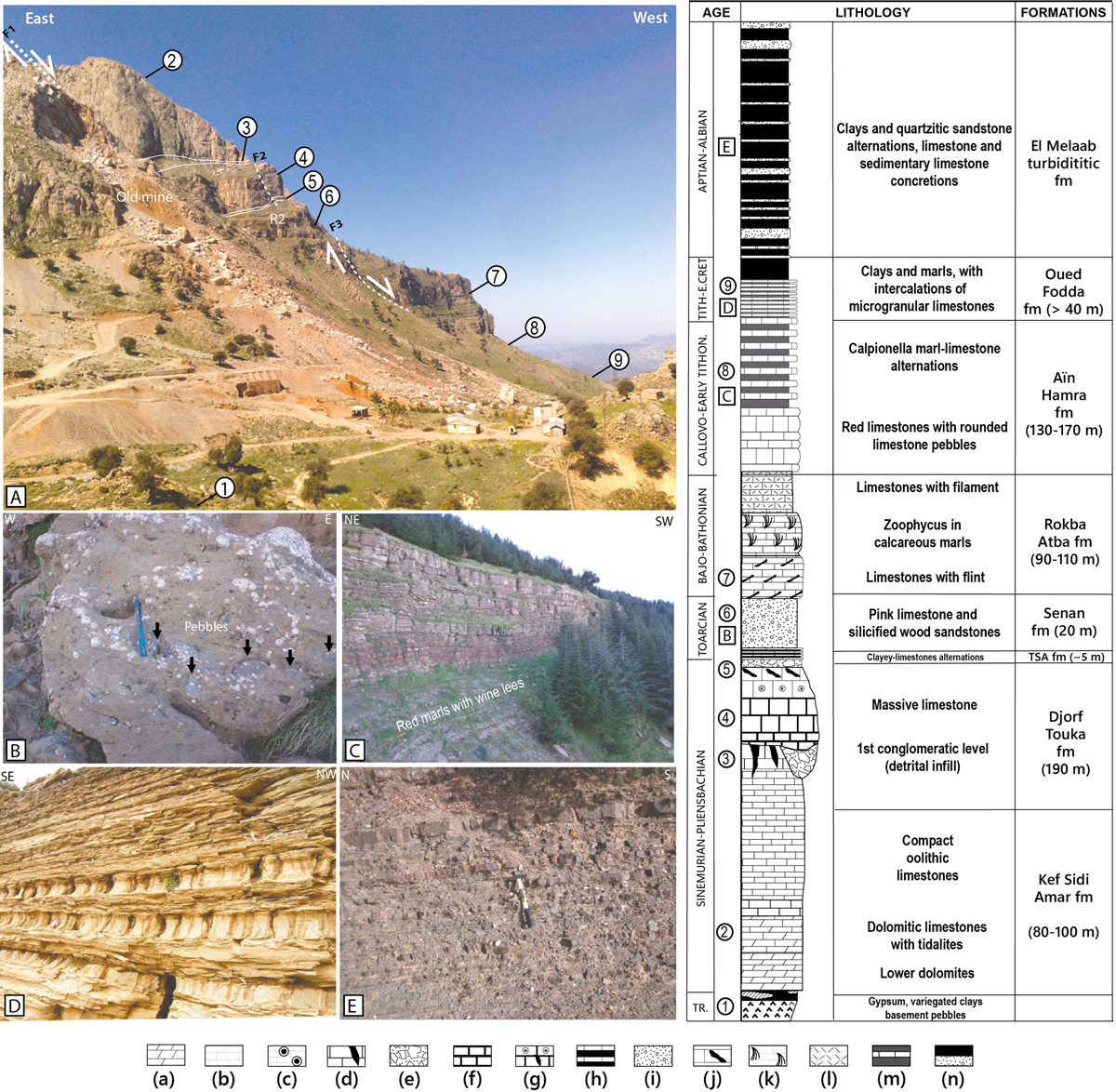
General stratigraphy of the GP massif. On the top left (A): Panorama of the western GP (from the north). Numbers indicate some key stratigraphical levels given on the stratigraphic column of the right panel. (B) to (E) pictures below the western GP panorama (A) shows some of these key levels: (B) Toarcian − Senan formation; (C) Callovian-Oxfordian − Ammonitico-Rosso; (D) Marl/clays alternations − Neocomian; (E) Aptian-Albian turbiditic levels. These letters are localized against the stratigraphic column too. Letter numbering on the right side of the stratigraphical column for the different rock types. (a) dolomite; (b) dolomitic limestone with tidalites; (c) compact oolithic limestone; (d) limestones with karstic caves; (e) conglomerates; (f) dark limestones; (g) foraminifera-rich massive limestones; (g) marl-limestone alternations; (i) sandstones with silicified woods; (j) silex limestones; (k) Zoophycos limestones; (l) bioclastic limestones with filaments; (m) Ammonitico-Rosso; (n) quartz-clay alternations; (o) major stratigraphic discontinuities. The faults are presented after Mattauer (1958) who considered them as normal lower Jurassic faults.
Current usage metrics show cumulative count of Article Views (full-text article views including HTML views, PDF and ePub downloads, according to the available data) and Abstracts Views on Vision4Press platform.
Data correspond to usage on the plateform after 2015. The current usage metrics is available 48-96 hours after online publication and is updated daily on week days.
Initial download of the metrics may take a while.