


| Issue |
BSGF - Earth Sci. Bull.
Volume 197, 2026
|
|
|---|---|---|
| Article Number | 4 | |
| Number of page(s) | 10 | |
| DOI | https://doi.org/10.1051/bsgf/2025027 | |
| Published online | 18 February 2026 | |
Post early Cretaceous evolution of the Cévenol fault system according to U-Pb geochronology
Evolution du faisceau de failles cévenoles depuis le Crétacé inférieur d’après la géochronologie U-Pb
1
Autorité de Radioprotection et de Sureté Nucléaire (ASNR), PSE-ENV/SCAN/BERSSIN, F-92260, Fontenay aux Roses, France
2
Géoazur, Univ. Côte d’Azur, CNRS, Observatoire de la Côte d’Azur, IRD, Valbonne, France
3
Université Paris-Saclay, CNRS, GEOPS, 91405, Orsay, France
4
Centre de Recherches Pétrographiques et Géochimiques, Vandoeuvre lès Nancy, France
5
Institut des Sciences de la Terre - Université Grenoble Alpes, Université Savoie Mont Blanc, CNRS : UMR5275 - France
6
Institut Terre et Environnement de Strasbourg - EOST, CNRS-UMR 7063, Université de Strasbourg, 5 Rue René Descartes, 67000 Strasbourg, France
* Corresponding author: This email address is being protected from spambots. You need JavaScript enabled to view it.
Received:
28
January
2025
Accepted:
17
October
2025
Abstract
The Le Teil (Rhône Valley) earthquake of magnitude 4.9 on November 11, 2019, located on the Cévennes fault system has raised many questions about how regional intraplate structures may be reactivated and how they could potentially trigger strong and shallow earthquakes. This study aims to better understand the geodynamic evolution of this major structure of France’s geology over geological time. A structural study was carried out between Alès and Cruas localities, and synkinematic calcite samples were collected on fault planes and dated using the U-Pb method at LA-HR-ICPMS. Four major geodynamic episodes between 110 and 25 Ma were identified. In addition to recording tectonic events related to plate boundary geodynamics, the Cévenol Fault System appears to be a key structure in accommodating vertical motion differentials between the Massif Central, the Pyrenean domain and the South-East basin.
Résumé
Le séisme du Teil (Vallée du Rhône) de magnitude 4.9, le 11 novembre 2019, localisé sur le faisceau de faille des Cévennes, a suscité de nombreuses interrogations quant aux modalités de réactivation des structures intraplaques régionales. Cette étude vise à mieux comprendre l’évolution géodynamique de cette structure majeure de la géologie de la France au cours des temps géologiques. Une étude structurale a été réalisée entre Alès et Cruas et des échantillons de calcites syn-cinématiques ont ainsi été prélevés sur des plans de faille puis datés par la méthode U-Pb au LA-HR-ICPMS. Quatre épisodes géodynamiques compris entre 110 et 25 Ma sont mis en évidence. En plus d’enregistrer les événements majeurs associés à des phases géodynamiques aux limites de plaques, la Faille des Cévennes apparaît comme un élément clé dans l’accommodation des différentiels de mouvements verticaux entre le Massif Central, le domaine pyrénéen et le bassin du Sud-Est.
Key words: Cévenol fault system / intraplate domains deformation / Le Teil earthquake / U-Pb geochronology / fault-related calcite / LA-ICPMS
Mots clés : Faille des Cévennes / déformation des domaines intraplaques / séisme du Teil / datation U-Pb / calcite de faille / LA-ICPMS
© O. Parizot et al., Published by EDP Sciences 2026
 This is an Open Access article distributed under the terms of the Creative Commons Attribution License (https://creativecommons.org/licenses/by/4.0), which permits unrestricted use, distribution, and reproduction in any medium, provided the original work is properly cited.
1 Introduction
The Cévenol Fault System is an NE-SW trending major geological structure in southern France, almost 400 km long from the Pyrenean domain to the Alpine foreland (Fig. 1). This structure also defines the NW edge of the South-East Basin located within the intraplate domain and is known to have been reactivated several times over geological time (Séguret and Proust, 1965; Arthaud and Mattauer, 1969; Le Pichon et al., 1971; Bodeur, 1976; Parizot et al., 2022). Furthermore, it came into the spotlight when the Le Teil earthquake (Mw=4.9) occurred on November 11, 2019, on the La Rouvière fault, a segment of the Cévenol Fault System near the city of Montélimar. This earthquake caused a surface rupture (Ritz et al., 2020) (Fig. 1) and significant damages in some towns such as Le Teil, Saint-Thomé and Viviers. Even if the physical characteristics (Mw 4.9, reverse-faulting focal mechanism, epicenter on southeast-dipping La Rouvière fault) were later precisely established, the origins of this earthquake is debated (Larroque et al., 2020; Burnol et al., 2023).
Based on U-Pb calcite geochronological data, a recent study highlighted multiple periods of activity of the La Rouvière fault by analyzing samples from a core drilled through the structure (Gébelin et al., 2024). The aim of our study is to improve our understanding of the activity of the Cévenol Fault System in its entirety – i.e., considering all map-scale structures belonging to the system – over geological time and thus establish a precise geodynamic agenda for this intraplate structure. Was it active at times other than those already highlighted in previous studies? Was the Cévenol Fault System active continuously over time or only during major geodynamic episodes? When did the change from an Oligocene extensional structure to a contractional one (Le Teil earthquake) occur? To answer these questions, the segments of the Cévenol Fault System between Cruas to the NE and Alès to the SW (Fig. 1) were studied by combining structural geology and geochronology. Analysis of the fault planes and their associated syn-kinematic calcites dating by U-Pb laser ablation – high resolution – inductively coupled plasma – mass spectrometry (LA-HR-ICPMS), allows to reconstruct the periods of activity of the Cévenol Fault System, periods which are then contextualized in a geodynamic framework at regional scale.
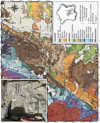 |
Fig. 1 A. Structural scheme of the study area and sampling outcrops (with red stars). Modified after 1:50 000 BRGM geological maps. B. Illustration of a strike-slip fault plane associated with syn-tectonic calcite observed at the site 9.1, north of St-Remèze. |
2 Geological context
The Cévenol Fault System is inherited from the Variscan orogeny (Séguret and Proust, 1965; Arthaud and Matte, 1975; Blès et al., 1989). During the Triassic to Middle Jurassic, Southern France subsequently underwent an extensional episode resulting from the rifting of the Tethys Ocean (Lemoine, 1982; Dercourt et al., 1986; Bonijoly et al., 1996; Frizon de Lamotte et al., 2011). This leads to an extensional reactivation of the SE-dipping Cévenol Fault System (Séguret and Proust, 1965; Roure et al., 1992). Previously published U-Pb ages obtained on single-phase synkinematic calcites in the southern part of the Cévenol Fault System (Languedoc region, Fig. 1) revealed mid-Cretaceous (approx. ≍ 100 Ma) activity on the latter, although no other geological evidence could validate them (Parizot et al., 2022). During Eocene times, the sinistral motion of the whole Cévenol Fault System during the convergence of the Iberian and Eurasian plates thought to be related to the formation of the Pyrenean orogen (Séguret and Proust, 1965; Arthaud and Mattauer, 1969; Bodeur, 1976; Parizot et al., 2022). From the Priabonian to the Aquitanian, the south-eastward retreat of the Tethys Ocean slab into the Mediterranean domain subsequently leads to the rifting of the Gulf of Lion, as well as an extensional episode in the eastern part of southern France (Séguret and Proust, 1965; Le Pichon et al., 1971; Séranne, 1999; Oudet et al., 2010; Jolivet et al., 2020; Séranne et al., 2021). This geodynamic event induces a new extensional reactivation of the Cévenol Fault System, resulting in the formation of NE-SW-trending basins along the structure (e.g., the Montoulieu and Alès basins) (Le Pichon et al., 1971; Séranne, 1999; Sanchis and Séranne, 2000). Since Neogene times, the geodynamic history associated with the Cévenol Fault System activity seems to be more controversial. Guerin’s work (1973) highlights a dextral motion at the end of the Miocene, interpreted as a consequence of the Alpine phase. However, according to Bergerat (1987), this structure has been reactivated with a similar kinematics but earlier, during the Aquitanian, and is associated with a resumption of convergent movement of the African and Eurasian plates.
The study area (Fig. 1A) can be divided into two domains: (A) In the northern part, between Cruas and Vallon-Pont-d’Arc, the Cévenol Fault System is characterized by multiple parallel regional NE-SW faults extending over a width of almost 10 km. These include the Alba-la-Romaine and La Fare faults on the NW edge of the system and the St-Remèze and St-Montan faults to the SE. The Cévenol Fault System cuts across sedimentary formations of mainly Lower Cretaceous age. It is also possible to observe Oligocene-age deposits along some structures, as it is the case for the Pontet de Couloubre fault, north of Le Teil city. (B) Further south, between Vallon-Pont-d’Arc and Alès, the Cévenol Fault System cuts series of Jurassic to Lower Cretaceous age and consists in a single structure (Fig. 1A). Its activity during the Oligocene extension is recorded by the syn-rift filling of the NE-SW-trending Alès basin (Sanchis and Séranne, 2000).
3 Methods
The outcrops considered in this study were selected according to their location: only those located along regional scale faults were selected in order to restrict the study to the intraplate major structures. The calcite dating on these objects thus provides insights on the age of the activity of these regional faults, therefore allowing for interpreting in the light of the existing regional geodynamic framework. Sampled outcrops correspond to sedimentary deposits (limestone or marly-limestone) of ages ranging from Berriasian (145 Ma) to Aptian (117 Ma). A set of decametric fault planes was measured during the structural study of the area and 70 single-phase synkinematic calcites associated with these fault planes were sampled for petrographic observations and U-Pb dating (Fig. 1B). Petrographic observation was conducted using a binocular, as well as optical and cathodoluminescence (CL) microscopy. CL observations were carried out on an Olympus BX41 microscope coupled to a Cathodyne coldcathode catholuminescence (NewTec, Nîmes, France) operating at 12−13 kV and 200−250 μA, and a Qicam Fast 1394 digital camera (TELEDYNE QIMAGING, Surrey, Canada). These petrographic observations both allow us to validate the single-phase nature of the calcite samples and to determine preferential ablation zones by excluding potentially altered/contaminated areas.
Calcite samples were dated by U-Pb geochronology using a HR-ICP-MS Element XR from Thermo Scientific coupled to a Laser Ablation system (LA) ArF 193 nm from Teledyne Photon Machines at the Paris-Saclay University, following standard methods described elsewhere (Brigaud et al., 2020; Parizot, 2021; Blaise et al., 2022). Among the 70 calcite samples, 23 U-Pb ages were obtained, equivalent to a success rate of around 1/3. Details of these syn-faulting calcite samples and methods can be found in the Supplementary Information.
Sample nomenclature refers to the name of the sampling site. Their name includes the prefix “TEIL23-”, then the referent site number shown in Figure 1, and finally the suffix “#XX” corresponding to the sample number assigned to it at the time of sampling. Only the calcite “MAR23-U01”, which was not sampled at the same time as the others, does not have this designation. It is a striated fault related calcite sampled on the site “A”, SW of Montélimar (Fig. 1A).
Inferred principal stress orientations were reconstructed from fault-slip data with WinTensor© software (Delvaux and Sperner, 2003) using the right dihedral inversion method (Angelier and Mechler, 1977). However and as previously introduced, the Cévenol Fault System is a polyphase structure within which local variations in the stress field may complicate the interpretation of global stress tensors (Parizot, 2021). In this context, data inversion was carried out for each dated fault planes, in individual stereograms, to avoid any over-interpretation of the structural data – the mechanisms behind the reactivation of these structures being out of the scope of this study. Finally, as the bedding is generally sub-horizontal at the sites studied, it should be noted that the structural data were not back-tilted during analysis.
4 Results
The set of U-Pb ages obtained on the fault related calcites corresponds to an age range between c. 111 and 25 Ma (Fig. 2). Based on the results, four U-Pb age groups could be distinguished.
The first one involves synkinematic calcites with a mid-Cretaceous (Albian-Cenomanian) age: TEIL23-10.4#1: 111.2 ± 7.2 Ma, TEIL23-3.4#1: 108.6 ± 9.5 Ma, TEIL23-3.4#3: 104.2 ± 8.4 Ma, TEIL23-10.2#1: 98.3 ± 8.2 Ma, TEIL23-2.4#1: 95.5 ± 5.7 Ma, TEIL23-6.3#1: 93.5 ± 4.3 Ma (Fig. 2). The characteristics and Tera-Wasserburg graphs of each sample are detailed in the Supplementary Information. These U-Pb ages are associated with normal, reverse or strike-slip fault planes (Fig. 3). Due to their heterogeneity, it is thus not possible to use these data in order to determine a stress field at the scale of the Cévenol Fault System. However, near Le Teil town, at the location of a regional NE-SW fault, marls and limestones of Upper Aptian age outcrop (Figs. 1 and 4). Variations in the thickness of this sedimentary series on either side of normal fault planes support an extensional syn-depositional fault activity which could be related to the one identified in the same area by Thomasset et al. (2024) during the Barremian. According to the orientation of these structures, the deformation would be the result of an overall E-W directed extension. Furthermore, we can note that the most recent faults of this first phase have an inverse kinematics, suggesting either a possible change in stress field during the Cenomanian or local variations in the stress field.
The second U-Pb age group was identified from 6 fault-related calcites dating a tectonic episode from the Campanian to the Paleocene. These are: TEIL23-2.1#5: 76.0 ± 4.1 Ma, TEIL23-2.1 # 2: 75.6 ± 4.7 Ma, TEIL23-10.5 # 1: 73.0 ± 10.4 Ma, TEIL23-4.1 # 2: 69.6 ± 6.3 Ma, TEIL23-12.2#1: 62.0 ± 3.1 Ma, TEIL23-2.1#6: 58.9 ± 4.4 Ma (Fig. 2). All these dated samples are related to normal faulting, except TEIL23-2.1#2 and TEIL23-4.1#2 associated to strike-slip faulting (Fig. 3). They demonstrate that an extensional event caused the reactivation of the Cévenol Fault System as a normal (or transtensive) system during Campanian-Paleocene times.
Given the similarity of the data and their uncertainty range, the boundary between the 3rd and 4th age groups is not straightforward. Six fault related calcites produced an Eocene U-Pb age (Lutetian-Priabonian) : TEIL23-3.2#2: 48.2 ± 3.7 Ma, MAR23-U01: 42.2 ± 2.2 Ma, TEIL23-3.3# 1: 38.4 ± 7.6 Ma, TEIL23-12.1 # 1: 38.1 ± 4.0 Ma, TEIL23-3.4#4: 36.3 ± 2.4 Ma, TEIL23-10.1#3: 36.0 ± 7.8 Ma (Fig. 2). Structural data show an activation (or reactivation) of at least three sinistral strike-slip fault planes (≈ NE-SW oriented) and one reverse fault plane oriented NW-SE. The inversion of these fault-slip indicates a compressional episode along the Cévenol Fault System associated with a maximum principal stress σ1 oriented ≈ NNE-SSW (Fig. 3). Such a stress orientation is compatible with the overall sinistral reactivation of the Cevenol Fault System during the Middle – Upper Eocene (Lutetian-Priabonian).
Furthermore, five other fault related calcites are dated to the Oligocene (Chattian, Fig. 2) : TEIL23-2.2#1: 29.8 ± 8.2 Ma, TEIL23-9.1#7: 29.7 ± 6.5 Ma, TEIL23-11.1#1: 27.2 ± 2.9 Ma, TEIL23-4.1#4: 26.8 ± 3.2 Ma, TEIL23-9.1#2: 25.9 ± 4.8 Ma (Fig. 2). Among them, the uncertainty of the first two shows that they could be associated with the previous group (the “Eocene” group) as well as the Oligocene one. We therefore refer to the structural data of the three youngest calcites to discuss the orientation of the stresses. These calcites come from strike-slip (TEIL23-4.1#4) and normal (TEIL23-11.1#1 and TEIL23-9.1#2) fault planes, highlighting normal (or transtensive) activity of the Cévenol Fault System during the Upper Oligocene, associated with a ∼ NNW-SSE-trending σ3 (Fig. 3).
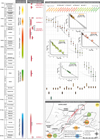 |
Fig. 2 Geodynamic history of southern France since Triassic period in relation to the Cévenol Fault System activities determined from previous studies. U-Pb geochronology results (U-Pb ages and their propagated uncertainty (2 σ)) and the age of the host rock associated with the synkinematic calcites samples are also visible on the Figure. 1: Blès et al., 1989, 2: Curnelle and Dubois (1986), 3: Séguret and Proust (1965), 4: Roure et al., 1992, 5: Hemelsdaël et al. (2021), 6: Parizot et al., 2022, 7 : Gébelin et al. (2024), 8: Arthaud and Mattauer (1969), 9: Guérin (1973), 10: Bodeur (1976), 11: Bergerat (1982), 12: Séranne et al. (2021), 13: Le Pichon et al. (1971), 14: Séranne et al. (1999), 15: Sanchis and Séranne (2000), 16: Bergerat (1987), 17 : Lacassin (1998), Baize and Ritz (2022), Cathelin (2024), Thomasset-Laurent (2025). |
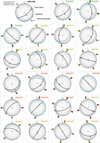 |
Fig. 3 Results of fault planes analysis associated with dated samples. Results are presented on the equal-area (Schmidt) stereographic lower-hemisphere projection and represent the present-day orientation of the fault plane (in black) and the bedding (in blue). State of stress is represented by orange, red, light green or dark green arrows, depending on the U-Pb age of the associated calcite sample. |
5 Discussion
The various activities of the Cévenol Fault System revealed in this study and in previous works, based on the study of map-scale faults belonging to a hundreds kms long structure can be placed in a broader geodynamic context, at the southern France scale (Fig. 2). Overall it seems that the Cévenol Fault System records continuous deformation from the mid-Cretaceous to the Upper Oligocene, without clear evidence for tectonic quiescence.
Indeed, the U-Pb and structural results indicate a first activity of the Cévenol Fault System during mid-Cretaceous times. This activity has also been identified in the southern part of the system (Parizot et al., 2022) suggesting a displacement along its entire length (Fig. 5). Furthermore, field data indicate that this event is compatible with the extensional activity of the Cévenol Fault System already underlined during lower Cretaceous times (Thomasset et al., 2024). During the Albian, the geodynamic context of France was associated with the development of the Pyrenean basins at the present location of the orogen (Choukroune and Mattauer, 1978; Lagabrielle et al., 2010; Mencos et al., 2015). This period is also characterized by the exhumation of some areas such as the Massif Central and the Durancian High leading in particular to the formation of bauxite in Provence (Masse and Philip, 1976; Combes, 1990; Séranne et al., 2002; Guyonnet-Benaize et al., 2010; Godeau et al., 2018; Barbarand et al., 2020). The Cévenol Fault System then appears to bound distinct domains: the future Pyrenean domain undergoing extension, the Massif Central domain uplifting, and the South-East Basin domain. At this time, the latter included the uplift of the Durancian Isthmus, the subsidence of the Vocontian Basin further north, and the Pyrenean basins in extension to the south (Tavani et al., 2018) (Fig. 5). In this context, the Cévenol Fault System could have acted as a reactivated inherited crustal weakness zone accommodating at least a part of the differential vertical motion between the Massif Central highly exhumed, >1000 m according to Barbarand et al., (2020) and the South-East Basin (less exhumed, 140 m according to Guyonnet-Benaize et al., (2010) (Fig. 5).
The extensional reactivation of the Cévenol Fault System during Campanian-Paleocene times in the Montélimar region is unexpected, especially as it occurred in an overall compressional context. Indeed, at this period, southern France underwent an overall general North-South compression, associated with the convergence of the Iberian and Eurasian plates which have been initiated during the Santonian (84 Ma: Grool et al., 2018). Gébelin et al. (2024) obtained U-Pb ages testifying to the activity of the La Rouvière fault between 90 and 75 Ma which the authors associate with thermal subsidence in the Ardeche region at this time. However, prior to this study, some authors were already discussing probable Cévenol Fault System activity at this time but without strong evidence. This is the case of Arthaud and Mattauer (1972), who suggested a strike-slip activity of the structure as early as the Upper Cretaceous and which would be at the origin of a shift between the Pyrenean and Provençal areas. In addition, Séranne et al. (2002) speculate on a “differential motion on either side of the Cevennes Fault during the Late Cretaceous”, linked to an uplift of the Massif Central with respect to the South-East basin. The extensional activity identified on the Cévenol Fault System seems to support this idea, and it would thus accommodate such a differential movement between both domains (Fig. 5). As suggested by Arthaud and Mattauer (1972), it cannot be excluded that the Cévenol Fault System had a strike-slip component at that time.
The so-called “Pyrenean” phase occurs during the Eocene and is associated with the main convergence phase (Fitzgerald et al., 1999; Grool et al., 2018). In particular, this period is characterized by the evolution of the landscapes of southern France, with the formation of 1. the present-day orogen, 2. large regional structures in the foreland and 3. structures resulting from lower-intensity deformation in the intraplate domain (Lacombe et al., 1996; Lacombe and Mouthereau, 1999; Lacombe and Obert, 2000; Parizot, 2021). Regarding the Cévenol Fault System, this study shows a reactivation from the Eocene to the Lower Oligocene with a sinistral – transpressive motion (Fig. 5). This result is in agreement with all previous studies showing activity contemporary with the formation of the Pyrenean orogen (Séguret and Proust, 1965; Arthaud and Mattauer, 1969; Guérin, 1973; Bodeur, 1976; Bergerat, 1982; Blès et al., 1989; Hemelsdaël et al., 2021; Séranne et al., 2021; Parizot et al., 2022; Gébelin et al., 2024; Lacombe and Jolivet, 2005) (Fig. 2). This activity may have accommodated the differential horizontal motion between the “Massif Central” domain on the one hand and the “South-East Basin” domain on the other (Fig. 5).
The latest Cévenol Fault System activity revealed by the geochronological study combined with the structural study indicates normal motion of the structure in the Upper Oligocene (Fig. 5). This event is contemporaneous with the rifting of the Gulf of Lion and can be linked to the extensional regional episode that occurred in the Corbières (Mauffret et al., 2001; Parizot, 2021; Parizot et al., 2023), Provence (Lacombe et al., 1992; Hippolyte et al., 1993; Mauffret and Gorini, 1996; Espurt et al., 2012), Languedoc (Séranne, 1999; Hemelsdaël et al., 2021; Séranne et al., 2021) and Ardèche (this study). These U-Pb ages also support previous studies showing reactivation of the Cévenol Fault System in the Oligocene (Séguret and Proust, 1965; Le Pichon et al., 1971; Bergerat, 1987; Blès et al., 1989; Roure et al., 1992; Séranne, 1999; Sanchis and Séranne, 2000; Hemelsdaël et al., 2021; Gébelin et al., 2024).
Although the Cévenol Fault System seems to constitute a weak domain very sensitive to plate boundary evolution and associated vertical deformations, the lack of any record of post-Oligocene deformation that may be related to the Alpine phase on the Cévenol Fault System still remains surprising. It cannot be ruled out that the lack of Miocene U-Pb ages in the region is the consequence of a fluid chemistry at the origin of the fault related calcites that is unfavorable to U-Pb dating (too much common Pb and or too low U concentration, for instance). Nevertheless, Gébelin et al. (2024) as well as a recent study based on new deep seismic reflection profiles in the same area also highlight the lack of mio-pliocene deformation (related to the Alpine phase) on the Cévenol Fault System (Thomasset et al., 2024). Strikingly, the mio-pliocene alpine deformation dated by the U-Pb geochronology within the orogen (Bilau et al., 2023) has not been characterized by this method in the Paris Basin either (Blaise et al., 2022), although it is expressed by low-intensity and small-scale deformations features such as diaclase networks (Lacombe and Obert, 2000; Rocher et al., 2005; Missenard et al., 2017). This raises the question of a possible limited propagation of the stresses responsible for the formation of the alpine orogen in the intraplate domain, in contrast to the Eocene pyrenean phase identifiable through folds and faults 1000 km from the orogen (Lacombe and Mouthereau, 1999; Parrish et al., 2018).
 |
Fig. 4 Outcrop of Upper Aptian marls cut by normal fault planes showing an extensive syn-sedimentary episode to the west of Le Teil town (coordinates: 44.544526ˆ N 4.662370ˆ E). |
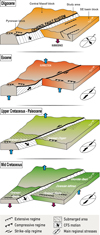 |
Fig. 5 Various sketches describing the Cévenol Fault System activity since the early Cretaceous and associated with the vertical and horizontal accommodation of three blocks: the Massif Central, the Pyrenean orogen and the South-East basin. See text for discussion. |
6 Conclusion
Many previous studies had already shown the sensitivity of the Cévenol Fault System through its recurrent reactivation over geological time. This study, based on the dating of fault related calcites, nevertheless reveals a more complete calendar for the tectonic evolution of this structure. Although this new study could not bring a hint about the age of the tectonic change from the Cenozoic extensional regime related to the rifting of the Gulf of Lion to the Current times contraction revealed by the Le Teil earthquake, it underlines the sensitive nature of the Cévenol Fault System to regional stresses. Indeed, this Fault System records deformation from the mid-Cretaceous to the Upper Oligocene, characterized by both known events (e.g., related to the formation of the Pyrenean orogen and to the rifting of the Gulf of Lion) and unexpected ones (e.g., linked to its extensional reactivation in the Campanian-Paleocene or to the developing of the Pyrenean basins). In addition to being an archive for the geodynamic history of southern France, this emblematic structure appears to be key in accommodating both horizontal and vertical deformation between the Massif Central, the Pyrenean domain and the South-East basin. Overall, this study shows that an intraplate fault system is thus able to record a continuum of deformation rather than discontinuous tectonic events.
Acknowledgments
Tectonic inversions were performed using Win-Tensor, a software developed by Damien Delvaux, Royal Museum for Central Africa, Tervuren, Belgium. We thank Frédéric Haurine and Agathe Julien-Sicre for their assistance during the LA-ICP-MS U-Pb analysis.
Conflict of interests
The authors declare there is no conflict of interest.
Data availability statement
The data that supports the findings of this study are available in the supplementary information of this article.
Supplementary Material
Table S1: Ablation parameters and characteristics of U-Pb dating on fault-related calcite Access Supplementary Material
References
- Angelier J, Mechler P. 1977. Sur une methode graphique de recherche des contraintes principales également utilisables en tectonique et en seismologie : la methode des diedres droits. Bull Soc Géol Fr S7-XIX: 1309–1318. https://doi.org/10.2113/gssgfbull.S7-XIX.6.1309. [Google Scholar]
- Arthaud F, Mattauer M. 1972. Présentation d’une hypothèse sur la genèse de la virgation pyrénéenne du Languedoc et sur la structure profonde du Golfe du Lion. C R Acad Sci Paris 274: 524–527. [Google Scholar]
- Arthaud F, Mattauer M. 1969. Sur les décrochements NE-SW sénestres contemporains des plis pyrénéens du Languedoc. CR Somm Séances Soc Géol Fr 8: 290–291. [Google Scholar]
- Arthaud F, Matte Ph. 1975. Les décrochements tardi-hercyniens du sud-ouest de l’europe. Géometrie et essai de reconstitution des conditions de la déformation. Tectonophysics 25: 139–171. https://doi.org/10.1016/0040(75)90014-1. [CrossRef] [Google Scholar]
- Baize, S. & Ritz, J.-F. 2022. Post-publication careers: ground ruptured, community united. Communications Earth & Environment 3 : 61. http://www.doi.org/10.1038/s43247-022-00392-y. [Google Scholar]
- Barbarand J, Préhaud P, Baudin F, Missenard Y, Matray JM, François T, et al. 2020. Where are the limits of Mesozoic intracontinental sedimentary basins of southern France? Mar Pet Geol 121: 1–15. https://doi.org/10.1016/j.marpetgeo.2020.104589. [Google Scholar]
- Bergerat F. 1982. Le couloir rhodanien au Paléogène : analyse de la fracturation et interprétation cinématique régionale. Rev Géol Dyn Géogr Phys Paris 23: 329–343. [Google Scholar]
- Bergerat F. 1987. Paléo-champs de contrainte tertiaire dans la plate-forme européenne au front de l’orogène alpin. Bull Soc Geol Fr 8: 611–620. [Google Scholar]
- Bilau A, Bienveignant D, Rolland Y, Schwartz S, Godeau N, Guihou A, et al. 2023. The Tertiary structuration of the Western Subalpine foreland deciphered by calcite-filled faults and veins. Earth-Sci Rev 236: 104–270. https://doi.org/10.1016/j.earscirev.2022.104270. [Google Scholar]
- Blaise T, Ali Khoudja SA, Carpentier C, Brigaud B, Missenard Y, Mangenot X, et al. 2022. Far-field brittle deformation record in the eastern Paris Basin (France). Geol Mag 159: 2095–2109. https://doi.org/10.1017/S0016756822000772. [Google Scholar]
- Blès JL, Bonijoly D, Castaing C, Gros Y. 1989. Successive post-Variscan stress fields in the French Massif Central and its borders (Western European plate): comparison with geodynamic data. Tectonophysics 169: 79–111. https://doi.org/10.1016/0040(89)90185-6. [Google Scholar]
- Bodeur Y. 1976. Evaluation de l’amplitude du décrochement cévenol par le décalage des faciès récifaux des environs de Ganges. C R Acad Sci 282: 961–963. [Google Scholar]
- Bonijoly D, Perrin J, Roure F, Bergerat F, Courel L, Elmi S, et al. 1996. The Ardèche palaeomargin of the South-East Basin of France: Mesozoic evolution of a part of the Tethyan continental margin (Géologie Profonde de la France programme). Mar Pet Geol 13: 607–623. https://doi.org/10.1016/0264(95)00075-5. [Google Scholar]
- Brigaud B, Bonifacie M, Pagel M, Blaise T, Calmels D, Haurine F, et al. 2020. Past hot fluid flows in limestones detected by Δ 47−(U−Pb) and not recorded by other geothermometers. Geology 48: 851–856. https://doi.org/10.1130/G47358.1. [CrossRef] [Google Scholar]
- Burnol A, Armandine Les Landes A, Raucoules D, Foumelis M, Allanic C, Paquet F, et al. 2023. Impacts of water and stress transfers from ground surface on the shallow earthquake of 11 November 2019 at Le Teil (France). Remote Sens 15. https://doi.org/10.3390/rs15092270. [Google Scholar]
- Cathelin, N. 2024. Analyse paléosismologique des failles de Saint-Montan et Bayne-Rocherenard, et étude géomorphologique de la vallée de l’Escoutay - Terminaison Nord-Est du faisceau de failles des Cévennes. Université de Montpellier. [Google Scholar]
- Choukroune P, Mattauer M. 1978. Tectonique des plaques et Pyrénées : sur le fonctionnement de la faille transformante nord-pyrénéenne; comparaisons avec des modèles actuels. Bull Soc Geol Fr 5: 689–700. [Google Scholar]
- Combes P-J. 1990. Typologie, cadre géodynamique et genèse des bauxites françaises. Geodin Acta 4: 91–109. [Google Scholar]
- Curnelle R, Dubois P. 1986. Evolution mésozoïque des grands bassins sédimentaires français; bassin de Paris, d’Aquitaine et du Sud-Est. Bull Soc Geol Fr 8 t.II: 529–546. [Google Scholar]
- Delvaux D, Sperner B. 2003. New aspects of tectonic stress inversion with reference to the tensor program. Geol Soc London Spec Publ 212: 75–100. https://doi.org/10.1144/GSL.SP.2003.212.01.06. [Google Scholar]
- Dercourt J, Zonenshain LP, Ricou L-E, Kazmin VG, Le Pichon X, Knipper AL, et al. 1986. Geological evolution of the tethys belt from the atlantic to the pamirs since the LIAS. Tectonophysics 123 : 241–315. https://doi.org/10.1016/0040(86)90199-X. [CrossRef] [Google Scholar]
- Espurt N, Hippolyte J-C, Saillard M, Bellier O. 2012. Geometry and kinematic evolution of a long-living foreland structure inferred from field data and cross section balancing, the Sainte-Victoire System, Provence, France. Tectonics 31: TC4021. https://doi.org/10.1029/2011TC002988. [Google Scholar]
- Fitzgerald PG, Muñoz JA, Coney PJ, Baldwin SL. 1999. Asymmetric exhumation across the Pyrenean orogen: implications for the tectonic evolution of a collisional orogen. Earth Planet Sci Lett 173: 157–170. https://doi.org/10.1016/S0012-821X(99)00225-3. [CrossRef] [Google Scholar]
- Frizon de Lamotte D, Raulin C, Mouchot N, Wrobel C, Blanpied C, Ringenbach C. 2011. The southernmost margin of the Tethys realm during the Mesozoic and Cenozoic: Initial geometry and timing of the inversion processes. Tectonics 30: TC3002. [Google Scholar]
- Gébelin A, Matonti C, Larroque C, Carr P, Ampuero J-P. 2024. First in situ calcite U-Pb dating revealing the past episodes of the 2019 Le Teil Earthquake (France). C R Géosci 356: 195–209. https://doi.org/10.5802/crgeos.280. [Google Scholar]
- Godeau N, Deschamps P, Guihou A, Leonide P, Tendil A, Gerdes A, et al. 2018. U-Pb dating of calcite cement and diagenetic history in microporous carbonate reservoirs: Case of the Urgonian Limestone, France. Geology 46: 247–250. https://doi.org/10.1130/G39905.1. [CrossRef] [Google Scholar]
- Grool AR, Ford M, Vergés J, Huismans RS, Christophoul F, Dielforder A. 2018. Insights into the crustal-scale dynamics of a doubly vergent orogen from a quantitative analysis of its forelands: a case study of the Eastern Pyrenees. Tectonics 37: 450–476. https://doi.org/10.1002/2017TC004731. [CrossRef] [Google Scholar]
- Guérin R. 1973. Un exemple du rôle de la tectonique et de la microtectonique dans la géométrie des écoulements karstiques fossiles et actuels : le Bas Vivarais calcaire. Montpellier. [Google Scholar]
- Guyonnet-Benaize C, Lamarche J, Masse J-P, Villeneuve M, Viseur S. 2010. 3D structural modelling of small-deformations in poly-phase faults pattern. Application to the Mid-Cretaceous Durance uplift, Provence (SE France). J Geodyn 50: 81–93. https://doi.org/10.1016/j.jog.2010.03.003. [Google Scholar]
- Hemelsdaël R, Séranne M, Husson E, Ballas G. 2021. Structural style of the Languedoc Pyrenean thrust belt in relation with the inherited Mesozoic structures and with the rifting of the Gulf of Lion margin, Southern France. In: Lacombe O, Tavani S, Teixell A, Pedreira D, Calassou S, eds. BSGF – Earth Sciences Bulletin 192: 46. https://doi.org/10.1051/bsgf/2021037. [Google Scholar]
- Hippolyte J-C, Angelier J, Bergerat F, Nury D, Guieu G. 1993. Tectonic-stratigraphic record of paleostress time changes in the Oligocene basins of the Provence, Southern France. Tectonophysics 226: 15–35. https://doi.org/10.1016/0040(93)90108-V. [CrossRef] [Google Scholar]
- Jolivet L, Romagny A, Gorini C, Maillard A, Thinon I, Couëffé R, et al. 2020. Fast dismantling of a mountain belt by mantle flow: Late-orogenic evolution of Pyrenees and Liguro-Provençal rifting. Tectonophysics 776: 228–312. https://doi.org/10.1016/j.tecto.2019.228312. [Google Scholar]
- Lacassin R, Meyer B, Benedetti L. 1998. Signature morphologique de l’activité de la faille des Cévennes (Languedoc, France). C R Acad Sci Terre Planèt 326: 807–815. [Google Scholar]
- Lacombe O, Angelier J, Laurent P. 1992. Determining paleostress orientations from faults and calcite twins: a case study near the Sainte-Victoire Range (southern France). Tectonophysics 201: 141–156. https://doi.org/10.1016/0040(92)90180-E. [CrossRef] [Google Scholar]
- Lacombe O, Jolivet L. 2005. Structural and kinematic relationships between Corsica and the Pyrenees-Provence domain at the time of the Pyrenean orogeny. Tectonics 24: TC1003. https://doi.org/10.1029/2004TC001673. [Google Scholar]
- Lacombe O, Laurent P, Rocher M. 1996. Magnitude de la contrainte déviatorique pyrénéenne dans l’avant-pays nord pyrénéen. C R Acad Sci Paris t. 322, série II a: 229–235. [Google Scholar]
- Lacombe O, Mouthereau F. 1999. Qu’est-ce que le front des orogènes? L’exemple de l’orogène pyrénéen. C R Acad Sci – Series IIA – Earth Planet Sci 329: 889–896. https://doi.org/10.1016/S1251(00)88502-X. [Google Scholar]
- Lacombe O, Obert D. 2000. Héritage structural et déformation de couverture : plissement et fracturation tertiaires dans l’Ouest du bassin de Paris. C R Acad Sci – Series IIA – Earth Planet Sci 330: 793–798. https://doi.org/10.1016/S1251(00)00228-7. [Google Scholar]
- Lagabrielle Y, Labaume P, de Saint Blanquat M. 2010. Mantle exhumation, crustal denudation, and gravity tectonics during Cretaceous rifting in the Pyrenean realm (SW Europe): Insights from the geological setting of the Iherzolite bodies. Tectonics 29: n/a-n/a. https://doi.org/10.1029/2009TC002588. [CrossRef] [Google Scholar]
- Larroque C, Ampuero J-P, Delouis B, Cornou C. 2020. Aux origines du séisme du Teil. La Recherche 94–97. [Google Scholar]
- Le Pichon X, Pautot G, Auzende J-M, Olivet J-L. 1971. La Mediterranee occidentale depuis I’Oligocene Schema d’evolution. Earth Planet Sci Lett 13: 145–152. https://doi.org/10.1016/0012-821X(71)90117-8. [Google Scholar]
- Lemoine M. 1982. Tectonique synsédimentaire mésozoïque dans les Alpes occidentales: naissance et évolution d’une marge continentale passive. In: Livre jubilaire à la mèm; Lucas P. BRGM. pp. 347–361. [Google Scholar]
- Masse JP, Philip J. 1976. Paléogéographie et tectonique du crétacé moyen en provence: révision du concept d’Isthme Durancien. R Géogr Phys Géol Dyn XVIII: 49–66. [Google Scholar]
- Mauffret A, Durand de Grossouvre B, Tadeu Dos Reis A, Gorini C, Nercessian A. 2001. Structural geometry in the eastern Pyrenees and western Gulf of Lion (Western Mediterranean). J Struct Geol 23: 1701–1726. https://doi.org/10.1016/S0191(01)00025-6. [CrossRef] [Google Scholar]
- Mauffret A, Gorini C. 1996. Structural style and geodynamic evolution of Camargue and Western Provencal basin, southeastern France. Tectonics 15: 356–375. https://doi.org/10.1029/95TC02407. [CrossRef] [Google Scholar]
- Mencos J, Carrera N, Muñoz JA. 2015. Influence of rift basin geometry on the subsequent postrift sedimentation and basin inversion: The Organyà Basin and the Bóixols thrust sheet (south central Pyrenees). Tectonics 34: 1452–1474. https://doi.org/10.1002/2014TC003692. [CrossRef] [Google Scholar]
- Missenard Y, Parizot O, Barbarand J. 2017. Age of the fontainebleau sandstones: a tectonic point of view. Bull Soc Géol Fr 188: 28. https://doi.org/10.1051/bsgf/2017194. [Google Scholar]
- Oudet J, Münch P, Borgomano J, Quillevere F, Melinte-Dobrinescu MC, Demory F, et al. 2010. Land and sea study of the northeastern golfe du Lion rifted margin: the Oligocene – Miocene of southern Provence (Nerthe area, SE France). Bull Soc Géol Fr 181: 591–607. https://doi.org/10.2113/gssgfbull.181.6.591. [Google Scholar]
- Parizot O. 2021. Expression et âge de la déformation intraplaque au front d’un orogène: du Chevauchement Frontal Nord Pyrénéen à la bordure sud du Massif Central, France. Université Paris-Saclay. [Google Scholar]
- Parizot O, Frizon De Lamotte D, Missenard Y. 2023. A new look at old debates about the Corbières (NE-Pyrenees) geology: salt tectonics and gravity gliding. BSGF – Earth Sciences Bulletin 194: 6. https://doi.org/10.1051/bsgf/2023003. [Google Scholar]
- Parizot O, Missenard Y, Barbarand J, Blaise T, Benedicto A, Haurine F, et al. 2022. How sensitive are intraplate inherited structures? Insight from the Cévennes Fault System (Languedoc, SE France). Geol Mag 1–13. https://doi.org/10.1017/S0016756822000152. [Google Scholar]
- Parrish RR, Parrish CM, Lasalle S. 2018. Vein calcite dating reveals Pyrenean orogen as cause of Paleogene deformation in southern England. J Geol Soc 175: 425–442. https://doi.org/10.1144/jgs2017-107. [CrossRef] [Google Scholar]
- Ritz J-F, Baize S, Ferry M, Larroque C, Audin L, Delouis B, et al. 2020. Surface rupture and shallow fault reactivation during the 2019 Mw 4.9 Le Teil earthquake, France. Commun Earth Environ 1: 10. https://doi.org/10.1038/s43247-020-0012-z. [CrossRef] [Google Scholar]
- Rocher M, Cushing M, Lemeille F, Baize S. 2005. Stress induced by the Mio-Pliocene Alpine collision in northern France. Bull Soc Géol Fr 176: 319–328. https://doi.org/10.2113/176.4.319. [Google Scholar]
- Roure F, Brun JP, Colletta B, Van Den Driessche J. 1992. Geometry and kinematics of extensional structures in the Alpine Foreland Basin of southeastern France. J Struct Geol 14: 503–519. [CrossRef] [Google Scholar]
- Sanchis E, Séranne M. 2000. Structural style and tectonic evolution of a polyphase extensional basin of the Gulf of Lion passive margin: the Tertiary Alès basin, Southern France. Tectonophysics 322: 219–242. https://doi.org/10.1016/S0040(00)00097-4. [CrossRef] [Google Scholar]
- Séguret M, Proust F. 1965. L’evolution tectonique post-hercynienne de la bordure mésozoique des Cévennes méridionales entre Alès et Ganges. Bull Soc Géol Fr S7-VII: 85–92. https://doi.org/10.2113/gssgfbull.S7-VII.1.85. [Google Scholar]
- Séranne M. 1999. The Gulf of Lion continental margin (NW Mediterranean) revisited by IBS: an overview. Geol Soc London Spec Publ 156: 15–36. https://doi.org/10.1144/GSL.SP.1999.156.01.03. [CrossRef] [Google Scholar]
- Séranne M, Camus H, Lucazeau F, Barbarand J, Quinif Y. 2002. Surrection et érosion polyphasées de la bordure cévenole. Un exemple de morphogenèse lente. Bull Soc Geol Fr 173: 97–112. [CrossRef] [Google Scholar]
- Séranne M, Couëffé R, Husson E, Baral C, Villard J. 2021. The transition from Pyrenean shortening to Gulf of Lion rifting in Languedoc (South France) – A tectonic-sedimentation analysis. In: Lacombe O, Tavani S, Teixell A, Pedreira D, Calassou S, eds. BSGF – Earth Sciences Bulletin 192: 27. https://doi.org/10.1051/bsgf/2021017. [Google Scholar]
- Tavani S, Bertok C, Granado P, Piana F, Salas R, Vigna B, et al. 2018. The Iberia-Eurasia plate boundary east of the Pyrenees. Earth-Sci Rev 187: 314–337. https://doi.org/10.1016/j.earscirev.2018.10.008. [Google Scholar]
- Thomasset C, Ritz J-F, Pouliquen S, Manchuel K, Le-Roux-Mallouf R. 2024. Geometry and tectonic history of the Northeastern Cévennes Fault System (Southeast Basin, France) : new insights from deep seismic reflection profiles. BSGF – Earth Sciences Bulletin 195: 17. https://doi.org/10.1051/bsgf/2024016. [Google Scholar]
- Thomasset-Laurent, C. 2025. Cadre structural et cinématique de la terminaison nord-est du faisceau de failles des Cévennes (NCFS) et analyse paléosismologique des failles de Marsanne et de Grangette. Université de Montpellier. [Google Scholar]
Cite this article as: Parizot O, Missenard Y, Baize S, Matonti C, Derycke A, Thomasset C, Cathelin N. 2026. Post early Cretaceous evolution of the Cévenol fault system according to U-Pb geochronology, BSGF - Earth Sciences Bulletin 197: 4. https://doi.org/10.1051/bsgf/2025027
All Figures
|
Fig. 1 A. Structural scheme of the study area and sampling outcrops (with red stars). Modified after 1:50 000 BRGM geological maps. B. Illustration of a strike-slip fault plane associated with syn-tectonic calcite observed at the site 9.1, north of St-Remèze. |
| In the text | |
|
Fig. 2 Geodynamic history of southern France since Triassic period in relation to the Cévenol Fault System activities determined from previous studies. U-Pb geochronology results (U-Pb ages and their propagated uncertainty (2 σ)) and the age of the host rock associated with the synkinematic calcites samples are also visible on the Figure. 1: Blès et al., 1989, 2: Curnelle and Dubois (1986), 3: Séguret and Proust (1965), 4: Roure et al., 1992, 5: Hemelsdaël et al. (2021), 6: Parizot et al., 2022, 7 : Gébelin et al. (2024), 8: Arthaud and Mattauer (1969), 9: Guérin (1973), 10: Bodeur (1976), 11: Bergerat (1982), 12: Séranne et al. (2021), 13: Le Pichon et al. (1971), 14: Séranne et al. (1999), 15: Sanchis and Séranne (2000), 16: Bergerat (1987), 17 : Lacassin (1998), Baize and Ritz (2022), Cathelin (2024), Thomasset-Laurent (2025). |
| In the text | |
|
Fig. 3 Results of fault planes analysis associated with dated samples. Results are presented on the equal-area (Schmidt) stereographic lower-hemisphere projection and represent the present-day orientation of the fault plane (in black) and the bedding (in blue). State of stress is represented by orange, red, light green or dark green arrows, depending on the U-Pb age of the associated calcite sample. |
| In the text | |
|
Fig. 4 Outcrop of Upper Aptian marls cut by normal fault planes showing an extensive syn-sedimentary episode to the west of Le Teil town (coordinates: 44.544526ˆ N 4.662370ˆ E). |
| In the text | |
|
Fig. 5 Various sketches describing the Cévenol Fault System activity since the early Cretaceous and associated with the vertical and horizontal accommodation of three blocks: the Massif Central, the Pyrenean orogen and the South-East basin. See text for discussion. |
| In the text | |
Current usage metrics show cumulative count of Article Views (full-text article views including HTML views, PDF and ePub downloads, according to the available data) and Abstracts Views on Vision4Press platform.
Data correspond to usage on the plateform after 2015. The current usage metrics is available 48-96 hours after online publication and is updated daily on week days.
Initial download of the metrics may take a while.