


| Issue |
BSGF - Earth Sci. Bull.
Volume 197, 2026
|
|
|---|---|---|
| Article Number | 14 | |
| Number of page(s) | 31 | |
| DOI | https://doi.org/10.1051/bsgf/2026009 | |
| Published online | 19 June 2026 | |
Neoproterozoic magmatic accretion and Pan-African reworking-differentiation of mafic crust derived from an enriched mantle: evidences from structural analysis, petrology and geochemistry of the Ketté gold district (Eastern Cameroon)
Accrétion magmatique Néoprotérozoïque et remobilisation-différenciation d'une croûte mafique dérivée du manteau enrichi: évidences issues de l'analyse structurale, de la pétrologie et de la géochimie des formations du district aurifère de Ketté (Est Cameroun)
1
Department of Earth Sciences, University of Dschang, P.O. Box. 67, Dschang, Cameroon
2
GET, Université de Toulouse, CNRS, CNES, IRD, UPS, Toulouse, France
3
Department of Earth Sciences, University of Yaounde I, P.O. Box. 812, Yaounde, Cameroon
4
Géosciences Montpellier, Université de Montpellier, CNRS-UMR 5243, Place E. Bataillon, Montpellier 34095, France
5
Department of Earth and Space Sciences, Lamar University, Beaumont, TX 77705, USA
* Corresponding author: This email address is being protected from spambots. You need JavaScript enabled to view it.
Received:
5
January
2026
Accepted:
26
May
2026
Abstract
The gold-rich Ketté formations belong to the Adamawa-Yadé block of the Neoproterozoic Central Africa Orogenic Belt. They consist of a complex association of tonalite, granodiorite, and heterogeneous granite including rafts of metapyroxenite, amphibolite, paragneiss and migmatite. Metapyroxenite and amphibolite are metaluminous (A/CNK: 0.65–0.95), calc-alkaline, enriched in LILE and LREE, with εNd610 < 0 and TDM ages of 1.7 Ga, highlighting their enriched mantle source. Paragneiss are rich in LREE, Cr, V, Sc and Ni and display A/CNK (1.06–1.08) and A/NK (1.5–3.49) ratios consistent with a sedimentary protolith made of poorly sorted greywackes and litharenites with a contribution from mafic rocks of the juvenile crust.
Granitoids display a variety of signatures, ranging from metaluminous to peraluminous (A/CNK: 0.94–1.04), calc-alkaline to alkaline. The heterogeneous granite in diffuse contact with migmatite have εNd654 values of –9.61 and –8.11, and are interpreted to reflect local magma collection within the zone of dominant partial melting of the paragneiss. The tonalite and granodiorite, characterized by magmatic textures, display Mg# of 39.9–48.8, low HFSE contents, and enrichment in LILE and LREE. They were likely formed by the fractional crystallisation of a dioritic magma derived from the partial melting of amphibolite.
The main structure of the migmatite is a shallow- to moderately dipping NE–SW trending syn-migmatitic foliation Smgm, marked by alternating leucosome and mesosome layers, with relics of an S0/S1 foliation locally preserved within the mesosome. Granulite-facies relics with a peak at 8–10 kbar/≥800 °C are preserved in metapyroxenite. Networks of texturally continuous leucosome veins concordant to discordant to the syn-migmatitic foliation, localization of granitic veins in shear zones and fold axial planes, attest for deformation in the presence of melt. Granitoids form kilometre-scale plutons with gently dipping magmatic fabrics (Sm-Sm/C2) concordant to the syn-migmatitic foliation. These fabrics are transposed into a steeply dipping (47°–74°) E–W to NW–SE trending mylonitic fabric (Smyl-S3/C3), bearing a moderately plunging (15°–49°) stretching lineation L3, marking the folded Mama Shear Zone (MaSZ).
These data indicate that the Ketté region has recorded magmatic accretion of a mafic crust originating from an enriched mantle source. This crust and its associated sediments were subsequently tectonically thickened during the Pan-African orogeny and affected by partial melting. Migration of dioritic to granitic magmas from the partially molten orogenic root led to syntectonic crustal differentiation.
Résumé
Les formations aurifères de Ketté, dans le bloc Adamawa-Yadé de la Ceinture Orogénique d'Afrique Centrale, sont constituées d'une association complexe de tonalite, granodiorite et granites hétérogènes, renfermant des enclaves de metapyroxénite, d'amphibolite, de paragneiss et de migmatite. Les metapyroxénites et amphibolites sont métalumineuses, enrichies en LILE et LREE, avec des valeurs εNd610 < 0 et des âges modèles TDM de 1.7 Ga, indiquant une source mantellique enrichie. Les paragneiss sont riches en LREE, Cr, Sc et Ni et présentent des rapports A/CNK et A/NK caractéristiques de protolithes riches en greywackes et litharénites, avec une contribution de roches mafiques issues de la croûte juvénile.
Les granitoïdes ont des signatures métalumineuses à peralumineuses, calco-alcalines à alcalines. Les granites hétérogènes présentent des contacts diffus avec les migmatites, des valeurs εNd654 de −9.61 et −8.11, et reflètent une accumulation locale de magma au sein de zones de fusion partielle dominante des paragneiss. Les tonalites et granodiorites présentent des textures magmatiques, des valeurs Mg# de 39.9–48.8, de faibles teneurs en HFSE et des enrichissements en LILE et LREE. Elles résulteraient de la cristallisation fractionnée d'un magma dioritique issu de la fusion partielle des amphibolites.
Les migmatites présentent une foliation syn-migmatitique Smgm orientée NE-SW, à pendage faible à modéré, marquée par l'alternance leucosomes-mésosomes, avec des reliques de la foliation S0/S1 localement préservées. Des reliques du faciès granulitique témoin d'un pic métamorphique à 8–10 kbar/≥800 °C sont conservées dans les metapyroxénites. Les réseaux continus de leucosome, concordants à discordants à la foliation syn-migmatitique, ainsi que la localisation des veines granitiques dans des zones de cisaillement et dans les axes des plis, témoignent d'une déformation en présence de magma. Les plutons kilométriques de granitoïdes présentent des fabriques magmatiques (Sm-Sm/C2) à faible pendage, concordantes avec la foliation syn-migmatitique. Ces fabriques sont transposées en des fabriques mylonitiques (Smyl-S3/C3) orientées E-W à NW-SE à fort pendage (47°–74°), portant une linéation d'étirement Le3 à plongement modéré (15°–49°), dans la zone de cisaillement plissée de Mama.
Ces données indiquent que le socle de Ketté a enregistré l'accrétion d'une croute mafique dérivée de la fusion du manteau enrichi. Cette croûte et les sédiments y associés ont ensuite été tectoniquement épaissis durant l'orogénèse Pan-Africaine, favorisant la fusion partielle. La migration de magmas de composition dioritique à granitique issus de la racine orogénique partiellement fondue a conduit à une différenciation crustale syntectonique.
Key words: Pan-African orogeny / Eastern Cameroon / enriched mantle / partial melting / crust-derived melts / migmatite
Mots clés : Orogénèse Pan-Africaine / Est Cameroun / manteau enrichi / fusion partielle / magma crustal / migmatites
© G.N. Mbianya et al., Hosted by EDP Sciences 2026
 This is an Open Access article distributed under the terms of the Creative Commons Attribution License CC-BY-NC (https://creativecommons.org/licenses/by-nc/4.0), which permits unrestricted use, distribution, and reproduction in any medium, except for commercial purposes, provided the original work is properly cited.
1 Introduction
The Central African Orogenic Belt (CAfOB) runs across Cameroon, Nigeria, Chad, the Central African Republic, and Sudan (Nzenti et al., 1988; Van Schmus et al., 2008). It was formed during the Neoproterozoic Pan-African orogeny and contributed to the amalgamation of western Gondwana (Kröner and Stern, 2004). The significance of Archean, Paleoproterozoic, Mesoproterozoic and early Neoproterozoic geochronological inheritances preserved in metamorphic and magmatic rocks is debated (Tanko Njiosseu et al., 2005; Liégeois et al., 2013; Ganwa et al., 2016; Tchakounté et al., 2017; Saha-Fouotsa et al., 2019; Djerossem et al. 2020). They could reflect the nature of the mantle source of Neoproterozoic magmas, and/or tectonic reworking of a variety of pre-Pan-African crustal domains and/or of sediments derived from these pre-Pan-African crustal domains. Accordingly, the CAfOB provides an excellent target to characterize the processes of crustal growth and differentiation, and their relationship with orogeny during the Precambrian era. Furthermore, in Cameroon, the CAfOB is known for its numerous orogenic gold deposits and uranium mineralization related to shear zones and associated hydrothermalism (Azeuda et al., 2022; Ngounouno et al., 2022; Ngassam Mbianya et al., 2021; Kouske et al., 2022; Takodjou Wambo et al., 2024), as well as iron (Motto Mbita et al., 2024) and Zr-REE-Y mineralization (Tchoupe et al., 2024). Understanding the tectonic, metamorphic and magmatic evolution of the CAfOB is thus crucial for future exploration of these ore deposits.
In Cameroon, a new geological synthesis has been provided by the PRECASEM mapping project (Delor et al., 2021). Nevertheless, the nature of the orogenic crust and the processes leading to the formation of the CAfOB are still a matter of debate. For instance, in the Adamawa-Yadé block (AYB) or central Cameroon domain, some authors (e.g., Toteu et al., 2022; Shellnutt et al., 2017; Abdelsalam et al., 2002; Liégeois et al., 2013) favour a model of collision between the Archean and Paleoproterozoic West African, Congo, São Francisco Cratons and the enigmatic Sahara Metacraton. Other authors support the idea of a collision between microcontinents of Paleoproterozoic age and magmatic arcs of Neoproterozoic age formed along the edge of the Congo Craton (Bouyo Houketchang et al., 2009, 2015; Toteu et al., 2004; Tchakounté et al., 2017). In contrast, Saha-Fouotsa et al. (2019) in Central Cameroon and Djerossem et al. (2020) in the Ouaddai massif, argue that Archean and Paleoproterozoic zircon cores of migmatitic gneiss are detrital and their U-Pb dates thus trace the source of the sediments reworked during the Pan-African orogeny rather than the age of reworked crustal blocks. On the other hand, several studies document the nature of mantle-derived magmatic rocks and their contribution to Neoproterozoic crustal growth (Kwékam et al., 2010; Tchouankoue et al., 2016; Fuh et al., 2021; Ayonta Kenné et al., 2023). Diorite and quartz-monzodiorite from Fomopéa contain zircon grains that yield U–Pb ages of 620 ± 3 Ma and 613 ± 2 Ma. The εNd(620 Ma) values range from +4 to –16, with TDM model ages between 0.9 and 2.9 Ga, suggesting an origin involving mixing between mantle-derived melts and Palaeoproterozoic to Archaean lower continental crust (Kwékam et al., 2010). Shoshonitic syeno-monzonite of Bangangte enriched in LILE and LREE, with εHf(t) < 0 and a zircon U-Pb age of ca. 584 Ma, are interpreted to have originated from partial melting of an enriched mantle source, with varying degrees of crustal contamination (Tchouankoué et al., 2016). High-K, metaluminous and alkaline to sub-alkaline syenite and mafic microgranular enclaves of Linte, with U–Pb zircon ages of 599 ± 3 Ma and 597 ± 4 Ma, are interpreted to have formed from a mantle-derived magma with a significant crustal contribution (Ayonta Kenné et al., 2023). While the geochemical signatures of mafic rocks most likely reflect the nature of the mantle source, the interpretation of those of intermediate to felsic magmatic rocks is more complex. These rocks may have formed either through the fractional crystallisation of mantle-derived magmas or through the partial melting of mafic rocks, with varying contributions from metasediments.
In addition to the growth and magmatic history, the tectonic evolution of the CAfOB in Cameroon remains topical. Most studies do not provide detailed structural analysis and rely primarily on geochemical and/or geochronological data to establish evolutionary models. The role of major shear zones and faults in the generation, migration, and emplacement of magma remains poorly constrained. Some studies have documented relationships between magma emplacement and the activity of the Central Cameroon Shear Zone and the Tcholliré–Banyo Shear Zone (e.g., Kwékam et al., 2010; Nomo Negué et al., 2017). In contrast, the Sanaga Fault in eastern Cameroun, which is also represented as a major structure, and its associated satellite shear zones have been poorly investigated, except for detailed structural analysis in Bétaré-Oya (Kankeu et al. 2009) and in Guiwa-Yangamo (Nomo-Negué et al., 2021). Does it correspond to a suture zone localizing the deposition-emplacement of the protoliths of greenstones of the so-called Lom basin and/or a post-collision shear zone? Moreover, what is the relationship between magma generation and emplacement, and the activity of the Sanaga Fault and its satellite structures?
In this paper we document the petrological, structural and geochemical record of the magmatic and metamorphic rocks in the Ketté gold district, located south of the Sanaga Fault and along the border with the Central African Republic, with emphasis on the Mama Shear Zone (MaSZ). The study aims to constrain the crustal and tectonic evolution of the Ketté district. Furthermore, the data presented allow us to discuss (i) the source of the protoliths of the amphibolite, metapyroxenite and paragneiss; (ii) their relationships with migmatite and granitoids and their significance for crustal differentiation; and (iii) the tectonic implications of their structural record. The structural data provide field-scale evidence for the evolution of amphibolites and paragneisses into partially molten rocks and subsequently into granitoids through partial melting, melt segregation and migration, and magmatic differentiation. They also constrain the syn-tectonic emplacement of the granitoids and their subsequent post-magmatic deformation. These observations provide new petrogenetic insights and allow a more robust identification of the source rocks of the granitoids. They further establish a structural and tectonic framework that will serve as a basis for future research and mineral exploration in the Eastern Cameroon gold district.
2 Geological setting
2.1 Geology of the CAfOB
The CAfOB, also known as the Pan-African North Equatorial Fold Belt or the Central African Fold Belt, comprises three different domains in Cameroon: (Nzenti et al., 1988; Ngnotue et al., 2000; Toteu et al., 2022; Fig. 1a):
The west Cameroon domain extends from the northwest of the Tcholliré-Banyo Shear Zone (TBSZ) to the Mayo-Kebbi domain in Chad (Penaye et al., 2006). It comprises metavolcanics and metavolcanosediments of the Poli Group and the Rey-Bouba greenstone belt, whose protolith is dated at ca. 830 Ma and ca. 670 Ma (Toteu et al., 2006; Bouyo Houketchang et al., 2009). It also includes pre-, syn- to late-tectonic calc-alkaline granite emplaced between 660 and 580 Ma (Kwékam et al., 2010; Dawaï et al., 2013). In addition, post-tectonic alkaline granitoids are present, with U-Pb zircon ages of ca. 567 Ma (Isseini et al., 2012).
The central domain or Adamawa-Yadé block (AYB) is limited to the North by the Tcholliré-Banyo shear zone (TBSZ) to the south of the Sanaga fault, and includes the Central Cameroon shear zone (CCSZ). It is a composite domain dominated by granite-gneissic complexes with Archean to Paleoproterozoic inheritances (Tchakounté et al., 2017; Ganwa et al., 2016), as well as greenstone belts interpreted as former volcanosedimentary basins (Soba et al., 1991; Toteu et al., 2006) and some juvenile Neoproterozoic plutonic rocks (Kwékam et al., 2010; Saha-Fouotsa et al., 2019; Fuh et al., 2021; Ayonta Kenne et al., 2023). Neoproterozoic Pan-African magmatism is syn- to post-collisional, calc-alkaline to alkaline, and emplacement of plutons is localized along major shear zones/faults (Nzenti et al., 2006; Hamdja Ngoniri et al., 2021; Kamguia Kamani et al., 2021). The granitoids are hosted by high-grade ortho- and para-gneiss with Archean, Paleoproterozoic and Neoproterozoic protoliths (Tanko Njiosseu et al., 2005; Nzenti et al., 2006; Ganwa et al., 2008). Four deformation phases are currently recognised (Kankeu et al., 2009; Nomo Negue et al., 2021; Azefack Mbounou et al., 2026). Gold mineralisation is found within the Eastern Cameroon district (Suh et al., 2006).
The southern domain or Yaoundé-Yangana nappes comprise a set of metasedimentary series including the Yaoundé group, the Yangana group, and the Mbalmayo-Ayos-Bengbi group. It consists of medium to high-grade rocks derived from mixed protolith of Neoarchean-Paloproterozoic-Neoproterozoic age, metamorphosed between 630 and 580 Ma (Penaye et al., 1993; Toteu et al., 2006; Nkoumbou et al., 2014). Plutonism occurs between 830 and 620 Ma (Owona et al., 2011; Toteu et al., 2022).
The NNE-SSW trending sinistral TBSZ has been proposed to represent a major boundary between the juvenile crust of the West Cameroon Domain (WCD) and the AYB dominated by reworking of a pre-Panafrican continental crust (Toteu et al., 2004; Ngako et al., 2008; Nomo Negué et al., 2017). The CAfOB is also crosscut by a series of regional shear zones including the dextral CCSZ (Ngako et al., 2008; Saha-Fouotsa et al., 2019) and the Sanaga Fault (SF) with uncertain kinematics that marks the contact between the Lom series and high-gradegneiss and plutonic rocks (Soba et al., 1991; Kankeu et al., 2009; Ngako et al., 2003). In eastern Cameroon, the SF ends in Central African Republic where it is known locally as the Bozoum-N'délé shear zone (Topien et al., 2023; Djamous et al., 2026).
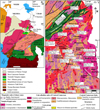 |
Fig. 1 Geological map: a) Cameroon (modified from Toteu et al., 2022 and Kouo et al., 2026); b) Eastern Cameroon (modified from Delor et al., 2021); Age data are from: Soba et al. (1991), Toteu et al. (2006), Asaah et al. (2015), Ateh et al. (2017), Fuh et al. (2021), Azeuda et al. (2022), Lemdjou et al. (2022). TBSZ: Tcholliré-Banyo Shear Zone, CCSZ: Central Cameroon Shear Zone, SF: Sanaga Fault, NBSZ; Ngoro Bélabo Shear Zone, MGSZ: Messaména-Gribi Shear Zone. |
2.2 Geological setting of the Eastern Cameroun gold district
The eastern Cameroon gold district comprises the Bétaré-Oya, Batouri, Ketté and Boden sub-districts (Fig. 1b). Bétaré-Oya comprises the Lom meta-volcanosedimentary series and I-Type syntectonic granite with calc-alkaline affinity dated between 650 and 620 Ma, with εHf(t) (−13.80 to −6.20) interpreted as reflecting a crustal origin (Azeuda et al., 2022). Zircon U-Pb geochronology on the metasediments points to the contribution of Archean (∼2500 Ma), Mesoproterozoic (∼1100 Ma), and Neoproterozoic (∼735 Ma) sources in the sedimentary protoliths and document high-temperature metamorphism between 665–585 Ma (Soba et al., 1991; Toteu et al., 2004, 2006; Azeuda et al., 2022). The Batouri sub-district exposes sub-alkaline I-Type granodiorite, granite, and tonalite emplaced between 624 and 589 Ma (U-Pb on zircon and Ar-Ar on K-feldspar and whole rock; Asaah et al., 2015). The Ngoura, Colomines, Ouaden, and Doumba Bello sub-districts consist of gabbro, granodiorite, and granite. Granite and granodiorite are calc-alkaline to shoshonitic, with U-Pb ages on zircon of 640 - 638 Ma, εNd(t) (−9.6 to −6.3), and εHf(t) (−10.1 to −2.1) pointing a crustal origin (Ngatcha et al., 2019; Lemdjou et al., 2022). A U-Pb/zircon age of 641 ± 4 Ma and εHf(t) values of −12.72 and −6.46 have been obtained on a biotite granite from Béké, Ketté (Azeuda et al., 2022). Rocks of the Eastern Cameroon district are crosscut by a network of NE-SW, E-W, and NW-SE trending shear/fault zones controlling the distribution of lode gold mineralization, accompanied by a variety of wall-rock alterations (Tata et al., 2018; Vishiti et al., 2018; Takodjou Wambo et al., 2024).
3 Methodology
3.1 Sampling and structural analysis
The study area was divided into six zones to facilitate the planning of the exploration campaigns. Hammer prospecting, based on the search for outcrops, was employed due to the thick lateritic cover. At the various sites surveyed, the types of outcrops and the colour of the rock were recorded. The structural features were carefully identified, described and measured. A preliminary relative deformation chronology was established in situ. Photographs were then taken at regular intervals, taking into account geometric parameters. Finally, samples were carefully collected from all the different petrographic types identified. In total, four samples of metapyroxenite, nine samples of amphibolite, eight samples of paragneiss, twenty samples of migmatitic gneiss, forty-five samples of granitoids, and twenty-five samples of mylonitised granitoids were collected. The structures were plotted on lower-hemisphere Schmidt diagrams using Stereonet v.8 software. Forty-three thin sections and polished thin sections were made at the Langfang Rock Detection Technology Service Limited and the Géosciences Environnement Toulouse (GET) laboratory.
3.2 Whole-rock geochemistry
The samples selected for analysis were chosen to cover all the different petrographic types identified. Representative samples were ground, crushed, and pulverised using an agate mortar at GET (France). Major and trace element concentrations were measured at the SARM of the CRPG in Nancy (France), following the protocol of Carignan et al. (2001). The powders were fused with lithium metaborate (LiBO2) at ∼980 °C. The resulting glass were dissolved in a nitric acid solution (HNO3 ± H2O2 and glycerol). Analyses of major elements (including Sc) were conducted by ICP-OES using a Thermo Fisher iCAP 6500 spectrometer. Trace elements were analysed by ICP-MS using a Thermo Fisher iCAP Q spectrometer. Calibration was performed using international geostandards and analytical accuracy was monitored through repeated measurements of reference materials and blanks. Detection limits are detailed in Supplementary Tables S1 and S2.
3.3 Sr-Nd isotopes
Sr and Nd isotopic analyses were carried out at the CRPG (Nancy, France). Between 100 and 200 mg of powdered samples were dissolved in HF-HNO3-HClO4 mixtures at 110–120 °C for 24 h. Before complete evaporation, the residues were treated with concentrated HNO3 to eliminate fluorides and then redissolved in HCl. Sr, Sm, and Nd were separated by column chromatography following the procedure of Luais et al. (1997). Sm and Nd isotopic ratios were determined using a MC-ICP-MS (Isoprobe, Micromass), whereas Rb isotopic compositions were analysed by ICP-MS (PerkinElmer ELAN 6000). Strontium isotopic ratios were measured using a TIMS (Finnigan). During the analytical session, the measured value for the NBS 987 standard was 87Sr/86Sr = 0.710253 ± 0.000009, and the JMC standard yielded a 143Nd/144Nd ratio of 0.512231 ± 0.000070. The external reproducibility of the Isoprobe instrument is estimated at ± 0.000030 for the measured isotopic ratios.
4 Results
4.1 Lithological units (petrography, structure and microstructure)
The Ketté area (Fig. 2) is dominated by a heterogeneous granite in diffuse contact with migmatite and containing lenses and rafts of amphibolite, metapyroxenite, schists and paragneiss; and intruded by more homogeneous tonalite and granodiorite (Figs. 3a, 3c, 3e, 3i, and 3j). To the south of the studied area, the E-W to NW-SE (N95-130°E) trending Mama Shear Zone (MaSZ) crosscuts all lithological units and is marked by a protomylonitic to ultramylonitic fabric.
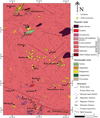 |
Fig. 2 Geological map (modified from Ngassam Mbianya et al., 2021). |
4.1.1 Ultramafic and mafic rocks
Ultramafic and mafic rocks are generally structurally and texturally associated in the field and are present as boudinaged layers and/or enclaves (Figs. 3a and 3b) aligned in the foliation of heterogeneous granitoids, tonalite and granodiorite. Only the larger ones (more than 100 m wide) are represented on the map of Figure 2.
Metapyroxenite have a heterogranular granoblastic microstructure (Fig. 3d). The primary Opx + Cpx + Pl paragenesis is characteristic of metamorphic conditions of ∼800 °C/8-10 Kbar (Burcher and Grapes, 2011). These pressure-temperature conditions correspond to the metamorphic peak and provide the first evidence of granulite facies in the Eastern district. Apatite is the main accessory mineral. Pyroxene prisms are partially retrogressed into amphibole and biotite.
Amphibolite have a grano-mematoblastic microstructure. The paragenesis consists of Amp + Pl + Kfs + Qtz + Bt, which is characteristic of the middle amphibolite facies at 4–5 kbar/550–600 °C (Bucher and Grapes, 2011). Hornblende occurs as poikilitic, locally acicular subhedral to anhedral prisms in a matrix of plagioclase and K-feldspar with interstitial quartz (Fig. 3e). The preferred orientation of amphiboles delineates an Sn foliation that is wrapped by the Smgm syn-migmatitic foliation (Fig. 3b).
 |
Fig. 3 Photographs and microphotographs of metamorphic rocks: a) metapyroxenite enclave in granodiorite; b) metatexitic amphibolite; c) amphibolite and paragneiss enclaves in diffuse contact with heterogeneous biotite granite interpreted as a diatexite. Cross polarized view of (d) metapyroxenite with heterogranular granoblastic microstructure; (e) amphibolite with hornblende-plagioclase-biotite and interstitial quartz; (f) amphibole and pyroxene paragneiss with granoblastic heterogranular microstructure; and (g) biotite and amphibole paragneiss grano-lepidoblastic microstructure. |
4.1.2 Paragneiss
Paragneiss are generally structurally associated with amphibolite (Figs. 3b and 3c). Paragneiss display a composite S0/n foliation marked by the alternation of layers of coarse quartz and feldspar grains with layers rich in biotite and/or amphibole, and/or pyroxene (Fig. 3c).
Amphibole and pyroxene paragneiss exhibit a heterogranular oriented granoblastic microstructure. Orthopyroxene (hypersthene) is retrogressed into hornblende and biotite. Clinopyroxene (augite) occurs as small prisms surrounded by a reaction rim at the contact of orthopyroxene and hornblende prisms (Fig. 3f). Hornblende is retrogressed into biotite, muscovite, and talc.
Biotite and amphibole paragneiss (Fig. 3c) display an oriented granolepidoblastic microstructure. Biotite lamellae mould the phenoclasts (Fig. 3g). The plagioclase phenoclasts are poikilitic and locally antipertithic (Fig. 3g). The paragenesis consists of Hbl + Pl + Kfs + Qtz + Bt and is characteristic of the amphibolite facies at ∼500 ± 50 °C. Retrograde transformations are related to the retromorphosis of amphiboles into biotite and chlorite [Hbl + Pl + H2O → Qtz + Bt + (Op), Hbl + Pl + H2O → Qtz + Chl + (Op)] (Tcheumenak Kouémo et al., 2023; Burcher and Grapes, 2011).
4.1.3 Migmatite
Migmatite of amphibolite and paragneiss (Figs. 3b and 3c) are typically metatexite characterized by a Smgm syn-migmatitic foliation (Fig. 4a) defined by the alternation of the leucosome-melanosome-mesosome triplet. The mesosome exhibits an heterogranular granoblastic microstructure, with a layered arrangement of quartz and feldspars alternating with biotite-rich levels (Fig. 4b). The quartz-feldspar leucosome displays interlocked texture with a variable grain size and forms a texturally continuous network of veins concordant to discordant relative to the synmigmatitic foliation (Fig. 4c). The paragenesis are Qtz + Kfs + Pl + Bt + Amp and Qtz + Kfs + Pl + Bt characteristic of amphibolite facies. Pyroxene is retrogressed into biotite and amphibole and amphibole is retrogressed into biotite (Opx + Kfs + H2O → Bt + Qtz + Op, Opx + Pl + Qtz + H2O → Amp + Pl) attesting for rehydration (Tcheumenak Kouémo et al., 2023).
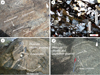 |
Fig. 4 Photographs and microphotographs of migmatite: a) migmatitic foliation Smgm in a metatexite; b) microstructure of alternating leucosome and mesosome layers in a metatexite; c) migmatite (metatexite - diatexite transition) with interconnected leucosome networks; d) Diatexite consisting of biotite and amphibole heterogeneous granite. |
4.1.4 Granitoids
4.1.4.1 Tonalite
Tonalite and granodiorite do not form individual plutons but correspond to different facies identified in the studied area. The porphyritic tonalite (Fig. 5a) consists of plagioclase (∼ 48%) and K-feldspar (∼ 4%) subhedral to anhedral phenocrysts with interstitial quartz (∼ 21%) biotite (∼ 17%), hornblende (∼ 5%) and clinopyroxene (∼ 3%). Plagioclase, K-feldspar and hornblende are locally stretched/elongated. Quartz is recrystallized into polygonal grains indicative of grain boundary migration recrystallisation (GBM) at 500–700 °C (Stipp et al. 2002b; Bons and Urai, 1992). Myrmekitic and perthitic textures (Fig. 5d) are common. Accessory minerals (∼ 2%) are titanite, apatite, zircon and opaques.
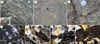 |
Fig. 5 Photographs and microphotographs of granitoids: a) magmatic foliation in tonalite; b) Sm/C magmatic fabric; c) σ mantle porphyroclats into protolymonitic heterogeneous granite; d) myrmekite and perthite in tonalite; e) spo highlighting the Sm foliation; f) granite with a magmatic fabric marked by imbricated deformed phenocrysts; g) melt-filled fracture. |
4.1.4.2 Granodiorite
The porphyritic granodiorite is characterized by subhedral feldspar megacrysts with rounded corners. They contain plagioclase (∼ 39%), quartz (∼ 25%), biotite (∼ 20%), K-feldspar (∼ 9%), hornblende (∼ 4%) and clinopyroxene (∼ 2%). Accessory minerals (∼ 1%) are zircon, monazite, fluorapatite and Fe-oxides.
4.1.4.3 Heterogeneous granite (diatexite)
Metatexite grade into diatexite made up of heterogeneous granite (Figs. 4c and 4d). The granite and alkali feldspar granite are distinguished based on their relative proportions of alkali feldspar and plagioclase in the modal QAPF diagram of Streckeisen. Medium- to coarse-grained granite is pink to light grey and contains K-feldspar (32–42%), quartz (19–36%), biotite (15–25%), plagioclase (13–16%) and amphibole (4–7%). Accessory minerals (∼ 3%) are pyrite, magnetite, titanite, zircon and monazite. The medium-grained alkali feldspar granite consists of subhedral K-feldspar (44–48%), quartz (22–26%), biotite (16–20%), plagioclase (4–6%) and amphibole (3–5%). Biotite flakes are grouped into clusters. Accessory minerals (∼ 3%) are zircon, pyrite, apatite and magnetite.
The Sm magmatic foliation in the granitoids is defined by the preferred orientation of coarse-grained feldspar (Figs. 4d, 5a, 5b and 5e), it is also marked by the preferential orientation of the biotite schlierens. Fractures in plagioclase grains indicate deformation under melt-present conditions (Fig. 5g). The filling of fractures suggests the involvement of a silicate melt and high temperatures above 650 °C (Bouchez et al., 1992; Fazio et al., 2020). The granitoids locally show evidence of intracrystalline solid-state deformation and display S/C fabrics, with sigmoid-shaped grains (Fig. 5c). The schistosity is underlined by the shape preferred orientation (spo) of crystals (Fig. 5f) and by the recrystallization of quartz and feldspar into subgrains. The quartz grains show undulatory extinction, indicative of plastic deformation mechanisms operating at 300–450 °C (Passchier and Trouw, 2005). The σ- and δ- porphyroclasts (Fig. 5c) of feldspar is indicative of non-coaxial deformation. Deformed polysynthetic twins suggest low temperatures or low strain (Blenkinsop, 2002). These features are indicative of a deformation continuum from magmatic to solid state (Passchier and Trouw, 2005; Blenkinsop, 2002).
4.1.5 The mylonitic Mama Shear Zone
The MaSZ is characterised by the transposition of the magmatic/submagmatic fabric of granitoids into a mylonitic to ultramylonitic fabric, marked by the development of a mineral stretching lineation Ln+2 and mylonitic foliation planes Smyl (Figs. 6a and 6b), resulting from dynamic recrystallization expressed by a variety of microstructures. The Smyl ultramylonitic foliation is related to a layered arrangement of fine-grained quartz and feldspar alternating with biotite- and amphibole-rich layers (Fig. 6b). In protomylonite and mylonite, a penetrative foliation Smyl is defined by discontinuous ribbons of quartz-feldspars and/or biotite-magnetite intersected by Cn+2 shear planes. These ribbons are included in a relatively fine feldspar-rich matrix; outlining a grain shape preferred orientation (gspo), and Smyl/Cn+2 composite structures (Figs. 6a and 6c). Lobate and amoeboid quartz grains (Figs. 6d, 6e, and 6f) are dispersed into quartz with straight grain boundaries at 120° defining a subpolygonal texture (Fig. 6g) that indicate grain boundary migration recrystallisation (GBM) at 500–700 °C (Stipp et al. 2002b; Bons and Urai, 1992). The folded ribbons of feldspar subgrains, σ-sigmoids (Fig. 6e), asymmetric feldspar grains, the obliquity of Cn+2 shear planes relative to Smyl foliation planes (Fig. 6c), and biotite fish point to a dominant dextral movement. The Ф-sigmoids of feldspars (Fig. 6c) testify to a part of coaxial deformation. Subgrains and recrystallised grains surround phenoclasts, defining core-mantle structures (Fig. 6h) in ultramylonite, indicative of intermediate-temperature conditions (Hirth and Tullis, 1992; Passchier and Trouw, 2005). Biotite and amphibole are sigmoidal. Kinematic indicators at this stage include δ and ovoid phenoclasts. In protomylonite, bulges at the margins of feldspar and quartz grains indicate bulging recrystallisation (BLG), occurring around 280–400 °C (Stipp et al., 2002b; Bons and Urai, 1992). Similar bulges are also observed in some tonalite (Fig. 5d). Quartz grains exhibit undulatory extinction.
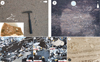 |
Fig. 6 Microstructures of Mama Shear Zone: a) Smyl/Cn+2 fabric of a mylonite; b) ultramylonitic foliation Smyl; c) Smyl/Cn+2 fabric of a mylonite, marked by the preferred orientation of quartz ribbons with serrated grain boundaries and an undulose extinction, and by biotite porphyroclasts with a sigma shape consistent with a sinistral sense of shear; d) amoeboid quartz grains; e) asymmetric grain with lobate borders; f) asymmetric alkali feldspar grains with bulges; g) quartz grains with grain boundaries at 120 °; h) porphyroclasts and multi-grain composite clasts embedded in finely recrystallized matrix, and alternating beds in an ultramylonite granodiorite. |
4.2 Regional scale structural pattern
4.2.1 Structures of ultramafic and mafic rocks, and paragneiss
The S0/n and Sn foliations preserved in paragneiss and amphibolite are attributed to a D1 deformation phase. These structures are wrapped into the syn-migmatitic foliation (Figs. 3b, 3c, and 7a). Accordingly, their current orientation is most probably not representative of their original position at the time of deformation, but reflects their transposition in the presence of melt.
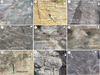 |
Fig. 7 Structures in migmatite: a) Metaxitic amphibolite with a continuous network of leucosome veins concordant to discordant to the syn-migmatitic foliation; b) Metatexite with a texturally continuous network of leucosome veins delineating the syn-migmatitic foliation, isoclinal folds and shear zones; c) Asymmetric metatexite boudins in heterogeneous granite (or diatexite); d) Asymmetric synmigmatitic (viscous) folds; e) Texturally continuous network of leucosome veins delineating the syn-nmigmatitic foliation and a dextral shear zone; f) syn-migmatitic strike-slip fault; g) Metatexite raft with folded leucosome in textural continuity with the heterogeneous granite (or diatexite); h) texturally continuous network of leucosome veins delineating the syn-migmatitic foliation, folds and shear zones; i) Metatexite with syn-migmatitic foliation marked by concordant leucosome in textural continuity with discordant leucosome localized in shear zones. |
4.2.2 Structures of migmatite
The syn-migmatitic foliation Smgm of the metatexite (Fig. 4a) displays NE–SW to E–W orientations, with low to moderate dips (21°–67°) towards the NW and SE (Fig. 8a). Concordant leucosome veins are in textural continuity with discordant leucosome localized in boudins necks and shear zone (Fig. 7a). Leucosome veins are affected by isoclinal folds with axial planes parallel to the syn-migmatitic foliation and an axis plunging to the NE (Fig. 7b).
The syn-migmatitic foliation is crosscut by syn-migmatitic Cmgm shear planes leading to the formation of pinch and swell boudins (Fig. 7c), Cmgm sinistral strike-slip faults (Fig. 7d), granitic injection-related dextral shear planes (Fig. 7e), and Cmgm strike-slip faults (Fig. 7f) oriented N84°E/25°W and N130°E/40°NE. Asymmetrically folded leucosomes Fn+1, consistent with a dextral sense of shear (Figs. 7g and 7h), have an axial plane oriented N80–84°E/28°W and N39°E/24°SW (Fig. 8b). Different generations of syn-migmatitic folds produce interferences patterns (Fig. 7d) corresponding to viscous folds (McLellan, 1984). Crenulation cleavage with sinistral shear planes oriented N70°E/30NW and dextral shear planes oriented N123°E/38NE is observed in the metatexite (Fig. 7i) and diatexite respectively.
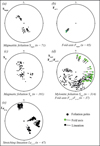 |
Fig. 8 Projection of field measurements of structural elements onto the lower hemisphere of a Schmidt diagram. |
4.2.3 Structures of granitoids
The Sm magmatic foliation displays a wide range of orientations, with low to moderate (16°–33°) dips (Fig. 8c). The magmatic foliation is transposed into discrete sinistral Cn+2 shear planes oriented N170°E. Sinistral Cn+2 strike-slip faults oriented N160°E result in the formation of asymmetric boudins (Fig. 9a). The magmatic foliation Sm generally concordant with the syn-migmatitic foliation Smgm, together with the various syn-migmatitic and magmatic structures, belongs to the progressive D2 deformation phase. This phase developed under partially molten conditions within shear zones accommodating ductile, non-coaxial deformation.
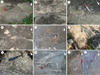 |
Fig. 9 Deformation in granitoids and mylonite: a) asymmetric boudins; b-c) granitic veins in shear zones associated with asymmetric folds; d) folded quartz veins with boudinaged hinges; e) quartz tension gashes; f) synfolial Fn+2 folds; g) M-shaped Fn+3 folds in ultramylonite; h) S-shaped Fn+3 folds in ultramylonite; i-j) Z-shaped Fn+2 folds. |
4.2.4 The MaSZ pattern
4.2.4.1 Mylonite
The mylonitic Smyl foliation predominantly trends E-W with a moderate to steep (45°–74°) dips (Fig. 8d). The dispersion of measurements is attributed to asymmetric folds affecting the mylonitic fabric, observed at the outcrop scale and reconstructed at the regional scale. The stretching lineation Len+2 is related to quartz + feldspar +/- biotite +/- magnetite stretched grains and trends E-W to WNW-ESE, with low to moderate (15°–49°) plunges (Fig. 8e). The narrow ultramylonite bands rich in biotite are oriented ∼N90°E. The development of mylonitic fabrics is intimately linked to the development of shear planes Cn+2 and second-order internal Cn+3 shears oriented N102°-N140°E to N160°-180°E, respectively. They thus define S/C composite structures (see Figs. 6a and 6c).
4.2.4.2 Veins
Some granitic veins are generally smoky, broken, thin (width: 1.5–15 cm) and have 30 cm to 2 m of length. They are generally arranged along the Cn+3 shear planes, which induce deflection of the Sn+2 mylonitic foliation into S- and Z-shaped geometries (Figs. 9b and 9c). The veins are generally parallel to the axial planes of Fn+3 folds with an axial plane oriented E-W, N-S, NNE-SSW. These are interpreted as vein related-folds (Druguet, 2019). The Fn+3 folds have low to moderate (13°–30°) plunges (Fig. 8d). Numerous folded quartz veins exhibit boudinage along their hinges (Fig. 9d). The straight to curved tension gashes, with long axes oriented N90°–100°E display crystalline growth fibres perpendicular to the walls with a dextral sense of shear (Fig. 9e).
4.2.4.3 Large scale folds
The mylonitic foliation in the MaSZ is affected by Fn+2 isoclinal folds with an axial plane oriented N100-110°E/10-20°E (Fig. 9f). This induced the development of an km-scale (Fig. 9g) E-W to NW-SE (N91°E/40°S to N142°E/36°SE) trending Fn+3 folds; with S- (Fig. 9h) and Z-shaped (Figs. 9i and 9j) second order folds on its normal and reverse limbs, oriented NE-SW to E-W with low (08°–20°) plunges (Fig. 8d). The axial plane of Fn+3 M-folds is parallel to the Cn+3 shear planes and exhibit a crenulation cleavage Sn+3//Cn+3 (Fig. 9h). The various structures developed in the MaSZ belong to the D3 deformation phase.
4.3 Whole rock geochemistry
4.3.1 Metapyroxenite and amphibolite
4.3.1.1 Major elements
Metapyroxenite and amphibolite are ultrabasic-basic to intermediate (SiO2: 43.76–54.80%; Tab. 1). The samples display high content in MgO (5.19–7.36%), with Mg# [Mg# = 100*MgO/(FeO + MgO) molar] between 50.45 and 64.42. The FeOt contents range from 6.70 to 12.86%, while the ferromagnesian contents (Fe2O3 + MgO + MnO + TiO2) range from 15.51 to 23.95%. Samples NGN5 and OUN2 are rich in Na2O (K2O/Na2O < 1), while GN7 and NGN3 are rich in K2O (K2O/Na2O > 1). In the MgO vs. Zr diagram (Geringer, 1979), the rocks plot in the orthoderived field (Fig. 10a). They have basaltic to andesitic compositions (Winchester and Floyd, 1977), belong to the calc-alkaline series (Figs. 10b and 10c) and are metaluminous (A/CNK < 1).
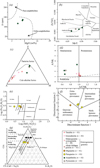 |
Fig. 10 a) MgO vs. Zr diagram; b) Nb/Y vs. Zr/TiO2 diagram; c) AFM diagram (Irvine and Baragar, 1971); d) A/CNK-A/Nk diagram (Shand, 1943); e) Log (SiO2/ Al2O3) vs. Log (Fe2O3/ K2O) diagram (Herron, 1988); f) sediment provenance characterisation (Roser and Korsch, 1988); g) A-CN-K diagram (Nesbitt and Young, 1989). |
Whole rock geochemical data for amphibolite, metapyroxenite, migmatite and paragneiss.
4.3.1.2 REE and trace elements
The investigated rocks are rich in LILEs (Ba: 104-2439 ppm; Rb: 91.9-238 ppm; Sr: 115-1259 ppm; Tab. 1) and show relatively low contents in Hf (3.50-4.15 ppm), Nb (4.83-12.0 ppm), and Ta (0.33-1.12 ppm). Zr (124-162 ppm) content is high. Transition metal contents are high (Cr: 58.7-434 ppm; Ni: 23.6-136 ppm; Co: 30.7-50.1 ppm; Sc: 18.33-47.57 ppm).
Metapyroxenite and amphibolite samples display a steep slope in the primitive mantle-normalized multi-elements diagram (Fig. 11a), except for sample NGN5, which shows negative anomalies in Ba and Sr. These anomalies may be explained by plagioclase fractionation or could correspond to a melt residue separated from the plagioclase. The rocks show negative anomalies in Th, Nb, Ta, Zr, and Ti while positive anomalies are common for Ba, U, La, Nd and Sm. The rocks are enriched compared to MORB. Chondrite-normalized REE patterns show higher HREE fractionation (GdN/YbN: 1.56–3.64) compared to LREE (CeN/SmN: 1.97 to 2.88), except for NGN5 (Fig. 11b). They display either negative Eu anomalies (Eu/Eu* = 0.83–0.89) or either no anomaly (Eu/Eu* = 1.02). The (La/Yb)N ratio ranges from 8.59 to 18.80.
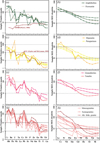 |
Fig. 11 Primitive mantle-normalized multi-elements diagrams (values from McDonough and Sun, 1995) and Chondrite-normalized REE patterns (values from Anders and Grevesse, 1989). |
4.3.2 Paragneiss and migmatitic gneiss
4.3.2.1 Major elements
Paragneiss and migmatitic paragneiss have SiO2 contents ranging from 53.65% to 73.95% (Tab. 1) and high Al2O3 contents (10.01–18.22%). Their chemical index of alteration (CIA) range from 60.48 to 77.66%, which is relatively low (Fig. 10g). Their Mg# varies between 34.77 and 38.75. Their ferromagnesian (Fe2O3 + MgO + MnO + TiO2) content ranges between 6.69% and 14.44%, while their CaO content ranges from 1.41% to 6.61%. Their K2O/Na2O ratios are 0.52–3.95. Their chemical compositions straddle the fields of shales, wackes, and litharenites on the Log (SiO2/Al2O3) vs. Log (Fe2O3/K2O) diagram of Herron (1988) (Fig. 11e) and is consistent with felsic to intermediate igneous and quartz-bearing sedimentary rocks (Fig. 10f).
4.3.2.2 REE and trace elements
The paragneiss and migmatitic gneiss display high contents in Rb (186-243 ppm), high to low content in Ba (1635-271 ppm) and Sr (777-161 ppm) compared to the UCC (Fig. 11c). HFSE contents (Hf: 4.34-10.5 ppm; Nb: 8.32-12.5 ppm, Ta: 0.12-1.0 ppm) are low, except for Zr (167-387 ppm). The U (2.24-3.74 ppm) and Th (10.8-13 ppm) contents are relatively similar to those of the UCC. The spider diagrams show relatively similar pattern (Fig. 11c) with positive anomalies in Rb, U, La, Pb, Nd, Zr, Dy and negative anomalies in Ba, Nb, Ce, Sr, and Ti. However, some samples (GN3, TN1, and TN2) are enriched in Cs, Rb, Ti, Zr and depleted in Ba, Rb, Nb, Ta, and K compared to the UCC. Migmatite sample GN3 is richer in U and Th than the other samples, as these incompatible elements preferentially concentrate in the leucosome during partial melting. In the chondrite-normalized REE diagrams (Fig. 11d), the rocks show negative Eu anomalies (Eu/Eu* = 0.30–0.82). GN3 has a positive Ce anomaly. The samples are enriched in LREE compared to HREE (LaN/YbN: 13.82–20.14; GdN/YbN: 2.48–5.67). The REEs sum is 101.38-243.24 ppm.
4.3.3 Granitoids
4.3.3.1 Major elements
Granitoids and their mylonitic and hydrothermally altered equivalents are presented together (Tab. 2). The mylonitised and/or altered rocks were investigated from both petrographic and geochemical perspectives, revealing evidence of potassic and phyllic alteration. Element mobility associated with mylonitisation and/or weathering was further assessed using the isocon method, which indicates relative enrichments in LILE across the samples (Ngassam Mbianya, 2024). However, these alteration processes fall outside the main scope of the present study. In this manuscript, we ensure that all petrogenetic interpretations are not biased by these secondary modifications. Any observations deviating from expected trends are explicitly identified, with non-mylonitised and unaltered samples used as references. Sample OUN3 is an ultramylonite, while BDN2 is an altered sample. Samples KNY3, KNY2, and MAN1 are both mylonitised and altered. The various granitoids have an intermediate to felsic composition (SiO2: 62.21–79.47%). The Al2O3 content (11.41–16.62%) is high, while the Na2O (2.47–4.30%) and K2O (2.50–7.17%) contents are moderate, with total alkali content (Na2O + K2O) ranging from 6.80% to 9.74%. The Fe2O3 content (5.59–0.88%) and CaO content (3.52–0.49%) are low to moderate, whereas TiO2 (1.15–0.063%) and MnO (<0.09%) are very low. The MgO contents range from 0.06% to 2.69%, with Mg# of 11.90 to 48.80. Based on normative compositions, the heterogeneous granite plot as syenogranite, monzogranite, and alkali feldspar granite in the Q′–ANOR diagram (Streckeisen and Le Maitre, 1979). The studied granitoids are calc-alkaline, except for GN2 which belongs to the alkaline series (Fig. 12a). The samples follow the Bowen trend in the AFM diagram (see Fig. 10c). According to the geochemical classification of Shand (1943), the granitoids are strongly metaluminous to weakly peraluminous with A/CNK ranging from 0.94 to1.04 (see Fig. 10d). They exhibit high K2O content and are classified as high-K calc-alkaline to shoshonitic (Fig. 12b). The granitoids range from the ferroan to the magnesian series (Fig. 12c) and plot in the calc-alkali, alkali-calcic and alkalic fields (Fig. 12d). In the Harker diagrams (Fig. 13), the different samples display negative linear to curvilinear correlations between the oxides Al2O3, MgO, CaO, TiO2, P2O5 and SiO2. The SiO2 vs. Na2O and SiO2 vs. K2O diagrams show dual correlations (Figs. 13c and 13d).
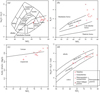 |
Fig. 12 Classification of granitoids: a) TAS diagram (Cox et al., 1979); b) SiO2-K2O diagram (Peccerillo and Taylor, 1976); c and d) MALI diagram (Frost et al., 2001). |
Whole rock geochemical data for granitoids.
4.3.3.2 REE and trace elements
Several elements, such as Pb and Cr display a dual trend with differentiation (Figs. 13g and 13h). All granitoids are enriched in LILEs.
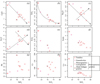 |
Fig. 13 Harker diagram for selected oxides (wt.%) and trace elements (ppm) in granitoids. |
Tonalite and granodiorite
The Rb/Sr ratios range from 0.21 to 0.85, and the Rb/Ba ratios from 0.08 to 0.72. HFSE contents are low (Hf: 2.83-6.52 ppm, Ta: 0.40-1.42 ppm, Nb: 7.33-13.0 ppm), except for Zr (104-235 ppm). They are richer in transition metals (Ni: 4.6-17.7 ppm, Cr: 54.2-95.9 ppm, V: 27.1-92.3 ppm) compared to the other granitoids. The ultramylonitized sample has the lowest transition metal content. Primitive mantle-normalized multi-element patterns show negative anomalies in Ba (except for TME1), Nb, Ta, Ce, Sr, P, Zr, and Ti (Fig. 11e); positive anomalies in Rb, Pb, La, Nd. Tonalite sample MOL1 has a positive anomaly in Th. Chondrite-normalized REE patterns (Fig. 11f) show enrichment in LREE [(La/Yb)N = 6.39–24.01, (Gd/Yb)N = 1.55–2.22] and negative anomalies in Eu (Eu/Eu* = 0.61–0.62), except for MOL1 (Eu/Eu* = 1.17). The sum of the REEs is 108.15-198.55 ppm.
Heterogeneous granite
The Rb/Sr ratios range from 0.77 to 4.38. The Rb/Ba ratios range from 0.21 to 1.68. The mylonitized and altered syenogranite sample MAN1 and the altered syenogranite sample BDN2 are less rich in LILEs. HFSE contents are low (Hf: 3.08-8.67 ppm, Ta: 0.15-1.43 ppm, Nb: 1.76-9.89 ppm), except for Zr (101-323 ppm).
For monzogranite samples, primitive mantle-normalized multi-element patterns are almost identical, except for NG03b (Fig. 11g). Negative anomalies in Ba, Nb, Ta (except NGN1), Ce, Zr (except NG03b and KNY2), Ti, and positive anomalies in Rb, Th (except NG03b), Pb are observed. Chondrite-normalized REE patterns (Fig. 11h) show negative Eu anomalies, except for NG03b (Eu/Eu* = 2.14). The enrichment in LREE compared with HREE is noticeable, with ratios (La/Yb)N = 5.38–38.86 and (Gd/Yb)N = 1.42–3.72. The sum of the REEs is 26.73-155.25 ppm, with the lowest values in NG03b.
For the monzogranite and alkali feldspar granite, primitive mantle-normalized multi-element patterns exhibit different shapes (Fig. 11g). The spectra of MAN1, NG03a, and GN2 display positive anomalies in Rb, Th, La, Pb, and Nd, and negative anomalies in Ba, Nb, Ta, Sr, Zr (except NG03a), Ti, and Yb. BDN2 (altered biotite syenogranite) shows a sawtooth spectrum due to the recorded alteration. The samples are enriched in LREE compared to HREE [(La/Yb)N = 20.95–80.65, (Gd/Yb)N = 1.97–6.3] and have weak negative Eu anomalies (Eu/Eu* = 0.58–0.71). BDN2 exhibits a pseudo-bell curve, positive Eu anomalies (7.08) and is not consistently enriched in LREE compared with HREE (Fig. 11h).
4.4 Whole rock Sr-Nd isotopes
Sr-Nd isotope analyses were performed on two amphibolite samples and two heterogeneous granite samples and the results are presented in Table 3.
The two amphibolite samples have distinct 87Rb/86Sr ratios of 4.5220837 and 0.2113048. The isochron method yields an Rb/Sr age of 610 ± 1 Ma, corresponding to the age of the high temperature Pan-African metamorphism. The (87Sr/86Sr)0 ratio is 0.707611, while the initial (87Sr/86Sr)610 ratios are 0.706950 and 0.707580. They have initial (143Nd/144Nd)610 ratios of 0.511572 and 0.511593. εNd0 values are −11.33 and −10.71, while εNd610 values are −5.46 and −5.05. The TDM ages are 1.702 and 1.701 Ga.
The granite have an isochron Rb/Sr age of 781 ± 8 Ma. The (87Sr/86Sr)0 ratio is 0.70528, while the (87Sr/86Sr)655 ratios range from 0.709229 to 0.709739. They possess initial (143Nd/144Nd)655 ratios of 0.511302 and 0.511379. εNd0 values are −16.27 and −14.96, and εNd654 values are −9.61 and −8.11. The TDM ages are 2.01 and 1.87 Ga.
Whole rock Sr-Nd isotopes.
5 Discussion
5.1 Protoliths of metapyroxenite, amphibolite and paragneiss
5.1.1 Nature and source of protoliths of metapyroxenite and amphibolite
The calc-alkaline metapyroxenite and amphibolite are characterised by high contents of transition metals (Sc, V, Ni, Co, Cr) and low Th/Sc ratios (0.04–0.05), which imply a ultramafic to mafic igneous protolith. Negative anomalies in Nb, Ti, and Ta, which are high field strength elements (HFSE) relatively immobile in aqueous fluids released from the subducting slab, suggest a suprasubduction mantle source for the magmatic protolith of these rocks. The slight negative anomaly in Ce suggests a contribution from pelagic sediments (Clive and Taylor, 1989). This is corroborated by the relatively low to high Rb/Sr ratios (0.07–1.56) and the positive Pb anomaly observed in one sample, which suggest a contribution from the continental crust. The εNd610 < 0 (–5.46 to –5.05) are comparable to those reported for the Fomopéa amphibolite (εNd620 = –3.6 to +1.6; Kwékam et al., 2010) and the Kombé-II amphibolite (Ganwa et al., 2008). The low εNd610 combined with enrichment in LREE and LILEs indicates a source from a mantle enriched by elements transferred from aqueous fluids (e.g., Carlson and Irving, 1994; Kwékam et al., 2010). These features suggest that metapyroxenite and amphibolite represent a former juvenile crust formed by partial melting of an enriched mantle, with a significant contribution of crustal material.
5.1.2 Protholiths of Paragneiss
Paragneiss, deriving from greywackes and metapelites, are characterized by an S0/1 foliation resulting from the transposition of beds rich in coarse quartz grains alternating with beds rich in ferromagnesian minerals into a schistosity. A protolith made of greywackes and lithic arenites is further supported by their Mg# (34.77–38.75), which is close to that of the upper crust (∼30; Sammon and McDonough, 2021), as well as by their A/CNK ratios close to 1 (1.06–1.08) and low to moderate N/K ratios (2–4.1) (Mendes et al., 2021). The high concentrations of Cr, V, Sc, and Ni indicate a poorly sorted immature protolith containing unstable ferromagnesian minerals. The enrichment in LREE compared to HREE, the negative anomaly in Eu, the ratios La/Sc (1.9–2.6), Th/Sc (0.7–2.2), Th/Co (0.6–2.5), and the positive anomaly in Pb are characteristic of materials originating from remobilization of mafic to felsic materials from the UCC (Cullers, 1995; Taylor and McLennan, 1985). Felsic rocks are enriched in Th while mafic rocks are enriched in Sc (McLennan et al., 1990). In this context, the protoliths of paragneiss are interpreted to represent a detrital sedimentary series derived from erosion of the juvenile crust.
5.2 Genetic links between amphibolite-paragneiss, migmatite, and granitoids from field relationships
The diffuse and gradual contacts of amphibolite and paragneiss with migmatite and heterogeneous granite points to a genetic link between these rocks. Partial melting of amphibolite and paragneiss is suggested by their presence as rafts and lenses into the migmatite. The textural continuity of concordant leucosome with veins localized into shear zones, boudins necks and heterogeneous granite (e.g., see Figs. 3b, 3c, 4c, 7a, 7b, 7c, 7e, 7f, 7g, 7h, and 7i), is consistent with syn-tectonic melt segregation and migration leading to the formation of an anatectic magma (Burg and Vanderhaeghe, 1993; Brown, 1994; Sawyer, 1999; Vanderhaeghe, 2009) during the D2 deformation phase. Moreover, heterogeneous granite contains layers of mafic minerals (see Figs. 4d) that points to their link with the amphibolite and paragneiss. Overall, these features support the origin of heterogeneous granite through partial melting of amphibolite and paragneiss beyond the metatexite-diatexite transition, under supra-solidus conditions (up to 850 °C) (Brown, 1994; White et al., 2003; Bonzi et al., 2021). The shear zones identified within the migmatite potentially reflect heterogeneous flow of partially molten rocks in response to the combined effects of boundary forces and buoyancy forces related to inverted density gradients arising from gravitational instabilities (Louis-Napoléon et al., 2024). The wide variability in orientations of the magmatic foliation Sm reflects heterogeneous flow within the partially molten crust in response to gravitational instabilities (McLellan, 1984). The preferential orientation of metamorphic enclaves and the presence of biotite schlierens are evidence of magmatic flow (McCaffrey et al., 1999; Vanderhaeghe, 2001). The magmatic fabrics parallel to the main shear zones together with the deformation continuum from magmatic to solid state are evidence of syn-kinematic emplacement (Vernon, 2004; McCaffrey et al., 1999; Mbounou et al., 2023).
5.3 Petrogenesis of granitoids
5.3.1 Magma evolution processes
The decrease in FeOt and TiO2 contents (see Figs. 13b and 13f) is explained by the early crystallization of Fe-oxides and Fe-Ti oxides, which are characteristic of the calc-alkaline series, as further illustrated by the Bowen trend (see Fig. 10c). The tonalite and granodiorite have lower Pb content compared to heterogeneous granite and exhibit different trends in the SiO2 vs. Pb, SiO2 vs. Cr, and SiO2 vs. Co diagrams (Figs. 13g, 13h, and 13i), suggesting that they may have originated from a different magma. The dual correlation observed for Na2O and K2O oxides with SiO2 in the syeno-monzogranite is attributed to deformation and hydrothermal processes, primarily occurring in the solid state (not within the scope). Furthermore, samples with more than 72% SiO2 content have recorded gains in SiO2 during deformation and alteration processes (Ngassam Mbianya, 2024).
Various studies have shown that the canonical ratios between immobile elements vary little during fractional crystallization but increase significantly during partial melting (e.g., Allègre et al., 1977; Winchester and Floyd, 1977). The La vs. La/Yb, Zr vs. Zr/Nb, and La vs. La/Sm diagrams (Fig. 14) display two evolutionary trends. The tonalite and granodiorite, together with the diorite and mafic plutonic suite (gabbro, diorite, monzonite) of Deng-Deng (Fossi et al., 2022) and Colomine (Fuh et al., 2021) in eastern Cameroon is interpreted as an evolution through fractional crystallization. A similar trend is identified in amphibolite samples, pointing to a potential genetic link between these rocks through fractional crystallization or partial melting. However, the mafic magmatic rock protolith of the amphibolite has recorded deformation and metamorphism that is not detected in tonalite and granodiorite and thus, they cannot be part of the same magmatic suite. Accordingly, for the Kette district, we favour a model of partial melting of the mafic rocks as the source of the migmatite, heterogeneous granite and tonalite-granodiorite to account for the genetic link between these rocks.
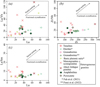 |
Fig. 14 Evolutionary process discrimination diagram: a) La vs. La/Yb; b) Zr vs. Zr/Nb; c) La vs. La/Sm. |
5.3.2 Origin and source of magmas
5.3.2.1 Heterogeneous granite
The syenogranite, monzogranite and alkali feldspar granite have an Mg# of 11.9–37.3, high Cr content (78.6-185 ppm), low Co content (1.30-3.74 ppm), with 0.39 ppm in altered and mylonitized samples), and low Ni content (2.2-25.1 ppm), which are consistent with a crustal source. They have a lower P2O5 content compared to tonalite and granodiorite, similar to that of paragneiss and metatexite migmatite. The rapid decrease in P2O5 content with differentiation indicates rocks of infracrustal origin (Chappell and White, 2001). Th/Sc ratios are high (2.6–20.5), with a value below 1 (0.5) only in sample NG03b. The enrichment in LREE, positive anomalies in Pb, Rb, U, and Th, and negative Eu anomalies further support a crustal origin (Clemens and Stevens, 2012), as do the εNd654 values of −9.61 and −8.11. In the molar C/FM vs A/FM diagram (Altherr et al., 2000), these rocks are interpreted as products of partial melting of metagreywackes and metapelites, consistent with previous studies in the Eastern Cameroon district (Ngatcha et al., 2019; Azeuda et al., 2022; Lemdjou et al., 2022; Takodjou Wambo et al., 2024). This interpretation is also in agreement with their position in the SiO2 vs Mg# diagram (Fig. 15), the petrographic data, and field evidence..
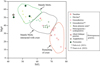 |
Fig. 15 Mg# vs. SiO2 diagram. |
5.3.2.2 Tonalite and granodiorite
Compared to heterogeneous granitoids, deciphering the origin of tonalite and granodiorite is more challenging. They form small bodies of a few hundred meters in diameter, slightly elongated parallel to the main regional structural trend of the host heterogeneous granitoids, suggesting an intrusion during regional deformation. The Mg# values are relatively high (34.7–48.8), Cr is high (54.2-95.9 ppm), whereas Co (1.04-7.8 ppm) and Ni (4.6-17.7 ppm) are low, close to mantle values. Their chemistry is comparable to that of the Deng-Deng granodiorite and diorites (located a few kilometres from Ketté), which have Mg# values of 38–47 and SiO2 of 55–68% (Fossi et al., 2022). It is also comparable to the chemistry of the gabbros and diorites from the Colomines basic plutonic suite (BPS), which have Mg# values of 45–58 and SiO2 of 50–63% (Fuh et al., 2021). The ultramylonitised granodiorite sample OUN3, which deviates from the other granodiorite samples in the Mg# vs. SiO2 diagram (Fig. 15), is mainly due to an increase in SiO2 content recorded during mylonitisation (Ngassam Mbianya, 2024). Moreover, the Ketté metapyroxenite and amphibolite display geochemical characteristics similar to those of the basic plutonic suite of Colomines. These different rocks could have originated from the same magma through differentiation processes. The Th/Sc ratios range from 0.5 to 7.5. The high-K signature, negative anomalies in Nb, Ta, and Ti, as well as the LREE and LILE enrichment, are characteristic of a convergent margin environment and an enriched mantle source. The strong positive Pb anomaly is attributed to the assimilation of crustal rocks. Intermediate SiO2, high Al2O3, enriched LREE, moderate HREE, and Na2O/K2O ratios > 1 are typical of rocks derived from partial melting of basaltic rocks (Osterhus et al., 2014; Jung et al., 2015).
Collectively, these features together with the regional geological context suggest that these rocks originated either from (1) partial melting of an enriched mantle or (2) melting of the mafic lower crust. Fractional crystallisation of a mafic magma derived from an enriched mantle to produce the granitoids is not favoured by the fact that amphibolite, interpreted as former mafic magmas, are metamorphic rocks and thus have been affected by deformation and metamorphism before the emplacement of the granitoids. Accordingly, partial melting of the amphibolite enclaves is a more likely scenario to produce the tonalite and granodiorite. The εNd(t) values of −9.0 to −7.6 and εHf(t) values on zircon ranging from −9.34 to −6.74 obtained on these granodiorite at Doumba Bello (Azeuda et al., 2022; Lemdjou et al., 2022) support a crustal origin. Thus, the tonalite and granodiorite source magmas originated from the melting of amphibolite, whose chemical signature they largely retain. In addition to the field evidence, the presence of intermediate amphibolite containing interstitial quartz and feldspar grains indicates partial melting and/or the percolation of a silicate melt between the amphibole and/or pyroxene phenocrysts. However, the precise mechanisms of their evolution remain to be clarified. These rocks either represent primary melts derived directly from the melting of lower crustal amphibolite or formed through fractional crystallisation of a dioritic liquid produced from such melts. The occurrence of diorite associated with these granodiorite at Ngoura and Colomines (Fuh et al., 2021), together with the chemical data, supports the latter hypothesis. Some metaluminous and magnesian granite could also correspond to more differentiated terms derived from these melts. In conclusion, the diorites, tonalite, and granodiorite of Eastern Cameroon rocks formed dominantly through the fractional crystallisation of a melt derived from the partial melting of mafic lower crust. The source of these rocks is similar to that of the syntectonic magnesian, metaluminous to slightly peraluminous diorites and granodiorite of the Southern Central Zone of the Pan-African Damara Orogen in Namibia (Simon et al., 2017). They are enriched in LREE and have εNd(t) < 0, resulting from partial melting of mafic lower crust that produced dioritic magma, which subsequently evolved through assimilation and fractional crystallisation processes (Jung et al., 2002; Osterhus et al., 2014; Simon et al., 2017; Jung et al., 2020). Experimental studies show that intermediate magmas can be generated by melting hydrous calc-alkaline basaltic rocks in the lower crust (Helz, 1976), with magma composition strongly dependent on whether fluids are present. Partial melting of fluid-absent amphibolite at high temperatures (900–1100 °C) produces dioritic, tonalitic, and granodioritic melts (Beard and Lofgren, 1991; Wolf and Wyllie, 1994; Rapp and Watson, 1995). Dehydration melting of hydrated metabasaltic rocks contributes to the formation of these melts, yielding anhydrous residual assemblages typical of granulitic rocks, rich in plagioclase, orthopyroxene, and clinopyroxene (Beard and Lofgren, 1991). The metapyroxenite observed in outcrops likely correspond to this solid residue. Although magmas generated in the lower crust are generally expected to migrate upwards, the spatial association between restite and intermediate magmas can be explained by several mechanisms. Magma extraction may remain incomplete, with a significant fraction of melt trapped within the restite when the percolation threshold is not significantly exceeded (Vigneresse et al., 1996; Sawyer, 1994, 2001; Brown, 2007). In addition, limited permeability due to the absence of effective migration pathways such as shear zones or fracture networks can significantly hinder melt migration, promoting in situ accumulation and crystallisation (Weinberg, 1999; Paterson and Tobisch, 1992). The relatively high viscosity of intermediate magmas further reduces their segregation and migration, favouring melt retention within the source region (Annen et al., 2006). In some cases, these magmas may represent isolated melt pockets that have not reached the diapiric ascent stage required for large-scale migration (Clemens, 1998; Petford et al., 2000). Finally, during ascent, magmas may entrain fragments of their source rocks, thereby preserving a spatial and textural link between melt and restite (Chappell et al., 1987; White and Chappell, 1977). On the other hand, despite a potential melt fraction beyond the melt percolation threshold, the ubiquitous presence of diatexites in the core crustal scale domes mantled by metatexites attests for the relative inefficiency of melt/solid segregation in the roots of orogenic belts (Burg and Vanderhaeghe, 1993; Withney et al., 2004; Vanderhaeghe, 2009: Kruckenberg et al., 2011; Toé et al., 2013).
6 Conclusion
The data and interpretations presented lead to the following conclusions:
The Ketté basement consists of tonalite, granodiorite, granite and alkali feldspar granite including rafts and lenses of amphibolite, metapyroxenite, paragneiss and migmatite.
Amphibolite and metapyroxenite are metaluminous (A/CNK: 0.65–0.95) and belong to the calc-alkaline series. They are enriched in LILE, LREE, and have a εNd610 < 0. They represent a juvenile crust originating from partial melting of an enriched mantle beneath the CAfOB.
The paragneiss have parageneses of Hbl + Pl + Kfs + Qtz + Bt. Their protolith is derived from poorly sorted, immature sediments originating from the juvenile crust.
The syn-kinematic granitoids are metaluminous to peraluminous (A/CNK: 0.94–1.04), high-K to shoshonitic, and belong to the calc-alkaline and alkaline series. They were emplaced during the syn- to post-collisional stage. The tonalite and granodiorite are interpreted as products of the fractional crystallisation of a melt derived from the dehydration melting of amphibolite with which they are in close contact, with a minor contribution from melts derived from the partial melting of paragneiss. The heterogeneous granite originated from dominant partial melting of metasedimentary rocks composed of paragneiss, consistent with the various metatexitic and diatexitic evolutionary stages observed.
The structural record of the Kette district is consistent with progressive deformation under a MP/MT metamorphic gradient reaching partial melting under amphibolite and granulite facies. D1 and syn-migmatitic phases D2 are attributed to tectonic accretion contributing to crustal thickening, with metamorphic peak in the granulite facies (∼ 800 °C/8-10 kbar), associated with partial melting and migmatite formation; the D2 phase was also at least partly controlled by gravitational instabilities driving heterogeneous flow of partially molten rocks. The granitoids are emplaced during the progressive phase D2. The D3 progressive deformation phase marks the reactivation of the R' MaSZ, leading to the development of a folded mylonitic band.
The Ketté basement represents an exhumed portion of the lower to middle levels of the orogenic root of the Central African Orogenic Belt. The juvenile crust was accreted through the crystallisation of mafic magmas derived from an enriched mantle. It subsequently underwent deformation, metamorphism and thickening due to tectonic accretion, accompanied by partial melting accommodated by shear zones. The segregation, migration and differentiation of melts derived from the partial melting of the mafic lower crust and associated sediments, in varying proportions, led to the formation of different groups of granitoids. These processes contributed to Neoproterozoic crustal growth and crustal reworking-differentiation during the Pan-African orogeny within the Adamawa-Yadé block.
Acknowledgments
The authors express their sincere gratitude to the Mayor of Ketté and to the traditional chiefs of Boubara, Ketté, and Gogoboua for their warm hospitality. We also thank the local guides for their invaluable assistance during fieldwork. Special thanks are extended to Fabienne de Parseval for the preparation of the polished thin sections. We are grateful to the Associate Editor Flavien Choulet, for his valuable comments and suggestions and to the Editor Laurent Jolivet, for overseeing the review process. We also thank the anonymous reviewers for their constructive comments and insightful suggestions, which significantly improved the quality of this manuscript.
Funding
The data presented in this study form part of the PhD thesis of the first author at the University of Dschang, in collaboration with UMR Géosciences Environnement Toulouse (France). The authors gratefully acknowledge the SCAC of the French Embassy in Cameroon and the AUF for financial support provided through the Collège Doctoral Régional MathinBio. This work also forms part of the LithoCOAC project, supported by the CNRS (France) and co-funded through the IRN CNRS FALCoL and the GDRI LithoSud.
Conflicts of interest
The authors declare that they have no competing interests or personal relationships that could have influenced the data presented in this manuscript.
Data availability statement
The data used to support the findings of this study are available from the corresponding author upon request.
Supplementary Material
Table S1. Detection limits for trace elements.
Table S2. Detection limits for major elements.
Figure S1. Geological map with location of figures and sample point.
Access Supplementary MaterialReferences
- Abdelsalam MG, Liegeois JP, Stern RJ. 2002. The Sahara metacraton. J Afr Earth Sci 34: 119–136. https://doi.org/10.1016/S0899-5362(02)00013-1. [CrossRef] [Google Scholar]
- Allègre CJ, Treuil M, Minster JF, Minster B, Albarède F. 1977. Systematic use of trace element in igneous process: Part I: Fractional crystallization processes in volcanic suites. Contrib Mineral Petr 60: 57–75. https://doi.org/10.1007/BF00372851. [Google Scholar]
- Altherr R, Holl A, Hegner E, Langer C, Kreuzer H. 2000. High-potassium, calc-alkaline I-type plutonism in the European Variscides: northern Vosges (France) and northern Schwarzwald (Germany). Lithos 50: 51–73. https://doi.org/10.1016/S0024-4937(99)00052-3. [Google Scholar]
- Anders E, Grevesse N. 1989. Abundances of the elements: Meteoritic and solar. Geochim Cosmochim Ac 53(1): 197–214. https://doi.org/10.1016/0016-7037(89)90286-X. [Google Scholar]
- Annen C, Blundy JD, Sparks RSJ. 2006. The genesis of intermediate and silicic magmas in deep crustal hot zones. J Petrol 47: 505–539. https://doi.org/10.1093/petrology/egi084. [Google Scholar]
- Asaah AV, Zoheir B, Lehmann B, Frei D, Burgess R, Suh CE. 2015. Geochemistry and geochronology of the∼ 620 Ma gold-associated Batouri granitoids, Cameroon. Int Geol Rev 57(11-12): 1485–1509. https://doi.org/10.1080/00206814.2014.951003. [Google Scholar]
- Ateh KI, Suh CE, Shemang EM, Vishiti A, Tata E, Chombong NN. 2017. New LA-ICP-MS U-Pb ages, Lu-Hf systematics and REE characterization of zircons from a granitic pluton in the Betare Oya gold district, SE Cameroon. J Geosci Geomat 5(6): 267–283. https://doi.org/10.12691/jgg-5-6-2. [Google Scholar]
- Ayonta Kenne P, Ganno S, Ogunyele AC, Wambo JDT, Ngnotué T, Fossi DH, et al. 2023. Mantle-crust-interaction and subduction dynamics in Central Cameroon: evidence from the Pan-African Linté microgranular magmatic enclaves (MMEs) and host syenite. Lithos 452: 107228. https://doi.org/10.1016/j.lithos.2023.107228. [Google Scholar]
- Azefack Mbounou RL, Ganno S, Ngnotue T, Tanko Njiosseu EL, Fossi DH, Ngassam Mbianya G, et al. 2023. Structural and kinematic analysis of the Nkondjock shear zone, central Cameroon: implications on the geodynamic evolution of the Central African Fold Belt. Arab J Geosci 16(4): 240. https://doi.org/10.1007/s12517-023-11336-x. [Google Scholar]
- Azeuda Ndonfack KI, Xie Y, Zhong R, Yomeun BS, Cui K, Shan X. 2022. Tectonic evolution of Neoproterozoic rocks, eastern Cameroon: Implication for gold mineralization in the Bétaré Oya and Woumbou–Colomine–Kette districts. Precambrian Res 368: 106475. https://doi.org/10.1016/j.precamres.2021.106475. [Google Scholar]
- Beard JS, Lofgren GE. 1991. Dehydration melting and watersaturated melting of basaltic and andesitic greenstones and amphibolites at 1, 3 and 6.9 kbar. J Petrol 32: 365–402. https://doi.org/10.1093/petrology/32.2.365. [Google Scholar]
- Blenkinsop TG. 2002. Deformation microstructures and mechanisms in minerals and rocks. New York (USA): Kluwer Academic Publishers, pp. 150. https://doi.org/10.1007/0-306-47543-X. [Google Scholar]
- Bons PD, Urai JL. 1992. Syn-deformational grain growth: microstructures and kinetics. J Struct Geol 14: 1101–1109. https://doi.org/10.1016/0191-8141(92)90038-X. [Google Scholar]
- Bonzi WME, Vanderhaeghe O, Van Lichtervelde M, Wenmenga U, André-Mayer AS, Salvi S, et al. 2021. Petrogenetic links between rare metal-bearing pegmatites and TTG gneisses in the West African Craton: The Mangodara district of SW Burkina Faso. Precambrian Res 364: 106359. https://doi.org/10.1016/j.precamres.2021.106359. [CrossRef] [Google Scholar]
- Bouchez JL, Delas C, Gleizes G, Nedélec A, Cuney M. 1992. Submagmatic microfractures in granites. Geology 20(1): 35–38. https://doi.org/10.1130/0091-7613(1992)020<0035:SMIG>2.3.CO;2. [CrossRef] [Google Scholar]
- Bouyo Houketchang M, Toteu SF, Deloule E, Penaye J, Van Schmus WR. 2009. U-Pb and Sm-Nd dating of high pressure granulite from Tcholliré and Banyo regions, evidence of a Pan-African granulite facies metamorphism in north-central Cameroon. J Earth Sci 54: 144–154. https://doi.org/10.1016/j.jafrearsci.2009.03.013. [Google Scholar]
- Bouyo Houketchang M, Zhao Y, Penaye J, Zhang SH, Njel UO. 2015. Neoproterozoic subduction-related metavolcanic and metasedimentary rocks from the Rey Bouba Greenstone Belt of north-central Cameroon in the Central African Fold Belt: new insights into a continental arc geodynamic setting. Precambrian Res 261: 40–53. https://doi.org/10.1016/j.precamres.2015.01.012. [CrossRef] [Google Scholar]
- Brown M. 1994. The generation, segregation, ascent and emplacement of granite magma: the migmatite-tocrustally-derived granite connection in thickened orogens. Earth-Sci Rev 36: 83–130. https://doi.org/10.1016/0012-8252(94)90009-4. [Google Scholar]
- Brown M. 2007. Crustal melting and melt extraction, ascent and emplacement in orogens: mechanisms and consequences. J Geol Soc 164: 709–730. https://doi.org/10.1144/0016-76492006-171. [Google Scholar]
- Burcher K, Grapes R. 2011. Petrogenesis of metamorphic rocks, eight. Berlin Heidelberg: Springer-Verlag. https://doi.org/10.1007/978-3-540-74169-5. [Google Scholar]
- Burg J-P, Vanderhaeghe O. 1993. Structures and way-up criteria in migmatites, with application to the Velay dome (French Massif Central). J Struct Geol 15(11): 1293–1301. https://doi.org/10.1016/0191-8141(93)90103-H. [Google Scholar]
- Carignan J, Hild P, Mevelle G, Morel J, Yeghicheyan D. 2001. Routine analyses of trace elements in geological samples using flow injection and low pressure on-line liquid chromatography coupled to ICP-MS: A study of geochemical reference materials BR, DR-N, UB-N, AN-G and GH. Geostand Newsl 25(2-3): 187–198. https://doi.org/10.1111/j.1751-908X.2001.tb00595.x. [Google Scholar]
- Carlson RW, Irving AJ. 1994. Depletion and enrichment history of subcontinental lithospheric mantle: an Os, Sr, Nd and Pb isotopic study of ultramafic xenoliths from the northwestern Wyoming Craton. Earth Planet Sc Lett 126(4): 457–472. https://doi.org/10.1016/0012-821X(94)90124-4. [Google Scholar]
- Chappell BW, White AJ. 2001. Two contrasting granite types: 25 years later. Aust J Earth Sci 48(4): 489–499. https://doi.org/10.1046/j.1440-0952.2001.00882.x. [Google Scholar]
- Chappell BW, White AJR, Wyborn D. 1987. The importance of residual source material (restite) in granite petrogenesis. J Petrol 28: 1111–1138. https://doi.org/10.1093/petrology/28.6.1111. [Google Scholar]
- Clemens JD, Stevens G. 2012. What controls chemical variation in granitic magmas?. Lithos 134: 317–329. https://doi.org/10.1016/j.lithos.2012.01.001. [Google Scholar]
- Clemens JD. 1998. Observations on the origins and ascent mechanisms of granitic magmas. J Geol Soc 155: 843–851. https://doi.org/10.1144/gsjgs.155.5.0843. [Google Scholar]
- Clive RN, Taylor LA. 1989. A negative Ce anomaly in a peridotite xenolith: evidence for crustal recycling into the mantle or mantle metasomatism?. Geochim Cosmochim Ac 53(5): 1035–1040. https://doi.org/10.1016/0016-7037(89)90208-1. [Google Scholar]
- Cox KG, Bell JD, Pankhurst RJ. 1979. The interpretation of igneous rocks. London: Georges Allen and Unwin. https://doi.org/10.1007/978-94-017-3373-1. [Google Scholar]
- Cullers RL. 1995. The controls on the major-and trace-element evolution of shales, siltstones and sandstones of Ordovician to Tertiary age in the Wet Mountains region, Colorado, USA. Chem Geol 123(1-4): 107–131. https://doi.org/10.1016/0009-2541(95)00050-V. [Google Scholar]
- Dawaï D, Bouchez JL, Paquette JL, Tchameni R. 2013. The Pan-African quartz-syenite of Guider (north-Cameroon): magnetic fabric and U–Pb dating of a late-orogenic emplacement. Precambrian Res 236: 132–144. https://doi.org/10.1016/j.precamres.2013.07.008. [CrossRef] [Google Scholar]
- Delor C, Bernard J, Tucker RD, Roig J-Y, Bouyo Houketchang M, Couëffé R, et al. 2021. 1:1 000 000-scale geological map of Cameroon, second edition. Ministry of Mines, Industry and Technological Development. [Google Scholar]
- Djamous GC, Bernard T, Victor M, Ghislain N, Jules T, Gustave BR, et al. 2026. Petrography and geochemistry of syenogranites and gabbronorites from the Niergui Massif, Guéra Province, Chad. Earth Sci 15(2): 109–124. https://doi.org/10.11648/j.earth.20261502.13. [Google Scholar]
- Djerossem F, Berger J, Vanderhaeghe O, Isseini M, Ganne J, Zeh A. 2020. Neoproterozoic magmatic evolution of the southern Ouaddaï Massif (Chad). BSGF-Earth Sci Bull 191(1): 34. https://doi.org/10.1051/bsgf/2020032. [Google Scholar]
- Druguet E. 2019. Deciphering the presence of axial-planar veins in tectonites. Geosci Front 10(6): 2101–2115. https://doi.org/10.1016/j.gsf.2019.02.005. [Google Scholar]
- Fazio E, Fiannacca P, Russo D, Cirrincione R. 2020. Submagmatic to solid-state deformation microstructures recorded in cooling granitoids during exhumation of late-variscan crust in North-Eastern Sicily. Geosciences 10: 311. https://doi.org/10.3390/geosciences10080311. [CrossRef] [Google Scholar]
- Fossi DH, Ganno S, Tankwa NM, Soh Tamehe L, Ayonta Kenné P, Kouayep Tchoundi CL, et al. 2022. Petrogenesis and tectonic setting of the Pan-African Deng-Deng intrusive complex in the Lom series, Eastern Cameroon. J Afr Earth Sci 188: 104484. https://doi.org/10.1016/j.jafrearsci.2022.104484. [Google Scholar]
- Frimmel HE. 2008. Earth's continental crustal gold endowment. Earth Planet Sc Lett 267: 45–55. https://doi.org/10.1016/j.epsl.2007.11.022. [Google Scholar]
- Frost BR, Barnes CG, Collins WJ, Arculus RJ, Ellis DJ, Frost CD. 2001. A geochemical classification for granitic rocks. J Petrol 42(11): 2033–2048. https://doi.org/10.1093/petrology/42.11.2033. [Google Scholar]
- Fuh CG, Tchakounte NJ, Kundu OM, Tchop JL, Nkoumbou C. 2021. Four Pan-African plutonic sets of the Colomines gold district (East-Cameroon): petrogenesis, K-Ar dating and geodynamic significance. J Afr Earth Sci 181: 104220. https://doi.org/10.1016/j.jafrearsci.2021.104220. [Google Scholar]
- Ganwa AA, Frisch W, Siebel W, Shang CK, Mvondo Ondoa J, Satir M, et al. 2008. Zircon 207Pb/206Pb evaporation ages of Panafrican metasedimentary rocks in the Kombé-II area (Bafia Group, Cameroon): constraints on protolith age and provenance. J Afr Earth Sci 51: 77–88. https://doi.org/10.1016/j.jafrearsci.2007.12.003. [CrossRef] [Google Scholar]
- Ganwa AA, Klötzli US, Hauzenberger C. 2016. Evidence for Archean inheritance in the pre-Panafrican crust of Central Cameroon: Insight from zircon internal structure and LA-MC-ICP-MS UPb ages. J Afr Earth Sci 120: 12–22. https://doi.org/10.1016/j.jafrearsci.2016.04.013. [Google Scholar]
- Geringer GJ. 1979. The origin and tectonic setting of amphibolites in part of the Namaqua metamorphic belt, South Africa. S Afr J Geol 82(3): 287–303. [Google Scholar]
- Goldfarb RJ, Groves DI, Gardoll S. 2001. Orogenic gold and geologic time: a global synthesis. Ore Geol Rev 18: 1–75. https://doi.org/10.1016/S0169-1368(01)00016-6. [Google Scholar]
- Hamdja Ngoniri A, Dadjo Djomo H, Ngnotue T, Ayonta Kenne P, Mbianya G, Ganno S, et al. 2021. Zircon trace element geochemistry and Ti-in-Zircon thermometry of the Ngazi-Tina Pan-African Post-Collisional Granitoids, Adamawa Cameroon. Int J Geosci 12: 307–328. https://doi.org/10.4236/ijg.2021.124017. [Google Scholar]
- Helz R. 1976. Phase relations of basalt in their melting ranges at P H2O = 5 kb: Part 2. Melt compositions. J Petrol 17: 139–193. https://doi.org/10.1093/petrology/17.2.139. [Google Scholar]
- Herron MM. 1988. Geochemical classification of terrigenous sands and shales from core or log data. J Sediment Res 58(5): 820–829. https://doi.org/10.1306/212F8E77-2B24-11D7-8648000102C1865D. [Google Scholar]
- Hirth G, Tullis JAN. 1992. Dislocation creep regimes in quartz aggregates. J Struct Geol 14: 145–59. https://doi.org/10.1016/0191-8141(92)90053-Y. [Google Scholar]
- Irvine TN, Baragar WRA. 1971. A guide to the chemical classification of the common volcanic rocks. Can J Earth Sci 8: 523–548. https://doi.org/10.1139/e71-055. [CrossRef] [Google Scholar]
- Isseini M, André-Mayer AS, Vanderhaeghe O, Barbey P, Deloule E. 2012. A-type granites from the Pan-African orogenic belt in south-western Chad constrained using geochemistry, Sr–Nd isotopes and U–Pb geochronology. Lithos 153: 39–52. https://doi.org/10.1016/j.lithos.2012.07.014. [CrossRef] [Google Scholar]
- Jacob JB, Moyen JF, Fiannacca P, Laurent O, Bachmann O, Janoušek V, et al. 2021. Crustal melting vs. fractionation of basaltic magmas: Part 2, Attempting to quantify mantle and crustal contributions in granitoids. Lithos 402: 106292. https://doi.org/10.1016/j.lithos.2021.106292. [Google Scholar]
- Jung S, Hoernes S, Mezger K. 2002. Synorogenic melting of mafic lower crust; constraints from geochronology, petrology and Sr, Nd, Pb and O isotope geochemistry of quartz diorites (Damara Orogen, Namibia). Contrib Mineral Petr 143: 551–566. https://doi.org/10.1007/s00410-002-0366-5. [Google Scholar]
- Jung S, Kröner A, Hauff F, Masberg P. 2015. Sr–Nd–Pb isotope composition of syn-orogenic diorite–granodiorite–granite complexes: mantle lithosphere–crust interaction vs. melting of mafic lower crust. J Afr Earth Sci 101: 253–265. https://doi.org/10.1016/j.jafrearsci.2014.09.015. [Google Scholar]
- Jung S, Romer RL, Pfänder JA, Berndt J. 2020. Petrogenesis of early syn-tectonic monzonite-granodiorite complexes–Crustal reprocessing versus crustal growth. Precambrian Res 351: 105957. https://doi.org/10.1016/j.precamres.2020.105957. [Google Scholar]
- Kamguia Kamani MS, Wang W, Tchouankoue JP, Huang S-F, Yomeun B, Xue EK, et al. 2021. Neoproterozoic syn-collision magmatism in the Nkondjock region at the northern border of the Congo craton in Cameroon: Geodynamic implications for the Central African orogenic belt. Precambrian Res 353: 106015. https://doi.org/10.1016/j.precamres.2020.106015. [Google Scholar]
- Kankeu B, Greiling RO, Nzenti JP. 2009. Pan-African strike-slip tectonics in eastern Cameroon - magnetic fabrics (AMS) and structure in the Lom basin and its gneissic basement. Precambrian Res 174(3): 258–272. https://doi.org/10.1016/j.precamres.2009.08.001. [Google Scholar]
- Kankeu B, Greiling RO. 2006. Magnetic fabrics (AMS) and transpression in the Neoproterozoic basement of Eastern Cameroon (Garga-Sarali area). Neues Jahrb Geol P M 239(2): 263–287. https://doi.org/10.1127/njgpa/239/2006/263. [Google Scholar]
- Kouo AFM, Tassongwa B, Metang V, Mbianya GN, Tchanamou DMF, Mbouagouoré LM, et al. 2026. A multisource remote sensing–fuzzy logic framework for uranium exploration in the newly identified bangoua prospect, Cameroon. Sci Afr e03202. https://doi.org/10.1016/j.sciaf.2026.e03202. [Google Scholar]
- Kouske AP, Gerard M, Etame J, Kanouo NG, Tchouatcha MS, Ghogomu TR, et al. 2022. Paragenesis, mineral chemical and microtextural studies of uranium bearing minerals in the brecciated albitites U–ores from the Kitongo shear zone, Poli region, northern Cameroon. Int J Earth Sci 111: 1413–1436. https://doi.org/10.1007/s00531-022-02186-1. [Google Scholar]
- Kröner A, Stern RJ. 2004. Pan-African Orogeny. In: Encyclopedia of geology. Volume 1. Elsevier, pp. 1–12. https://doi.org/10.1016/B0-12-369396-9/00431-7. [Google Scholar]
- Kruckenberg SC, Vanderhaeghe O, Ferré EC, Teyssier C, Whitney DL. 2011. Flow of partially molten crust and the internal dynamics of a migmatite dome, Naxos, Greece. Tectonics 30: TC3001. https://doi.org/10.1029/2010TC002751. [Google Scholar]
- Kwékam M, Liégeois JP, Njonfang E, Affaton P, Hartmann G, Tchoua F. 2010. Nature, origin and significance of the Fomopéa Pan-African high-K calc-alkaline plutonic complex in the Central African fold belt (Cameroon). J Afr Earth Sci 57: 79–95. https://doi.org/10.1016/j.jafrearsci.2009.07.012. [CrossRef] [Google Scholar]
- Lemdjou YB, Li H, Whattam SA, Azeuda Ndonfack KI, Tchato Tchaptchet DPI, Ketchaya YB, et al. 2022. Petrogenesis, tectonic setting and geodynamic implications of Ouaden, Doumba Bello, and Ngoura granitic plutons (Eastern Cameroon): Constraints from elemental and Sr − Nd − Hf isotopic data and zircon U − Pb ages. Lithos 418: 106682. https://doi.org/10.1016/j.lithos.2022.106682. [Google Scholar]
- Liégeois J-P, Abdelsalam MG, Ennih N, Ouabadi A. 2013. Metacraton: nature, genesis and behavior. Gondwana Res 23: 220–237. https://doi.org/10.1016/j.gr.2012.02.016. [CrossRef] [Google Scholar]
- Louis-Napoléon A, Vanderhaeghe O, Gerbault M, Martin R, Bonometti T. 2024. Formation of the Naxos nested domes and crustal differentiation by convection and diapirism. BSGF-Earth Sci Bull 195(1): 21. https://doi.org/10.1051/bsgf/2024017. [Google Scholar]
- Luais B, Telouk P, Albaréde F. 1997. Precise and accurate neodymium isotopic measurements by plasma-source mass spectrometry. Geochim Cosmochim Ac 61(22): 4847–4854. https://doi.org/10.1016/S0016-7037(97)00293-7. [Google Scholar]
- Mbounou RLA, Tchuifong ABK, Ganno S, Ngassam-Mbianya G, Nono GDK, Njiosseu ELT, et al. 2026. Shear zone evolution and regional strain implications during emplacement of the Nkondjock plutonic massif, Nyong-Bayomen Domain, Central African Orogenic Belt. J Afr Earth Sci 106144. https://doi.org/10.1016/j.jafrearsci.2026.106144. [Google Scholar]
- McCaffrey KJW, Miller CF, Karlstrom KE, Simpson C. 1999. Synmagmatic deformation patterns in the Old Woman Mountains, SE California. J Struct Geol 21: 335–349. https://doi.org/10.1016/S0191-8141 (98)00107-2. [Google Scholar]
- McDonough WF, Sun SS. 1995. The composition of the Earth. Chem Geol 120(3-4): 223–253. https://doi.org/10.1016/0009-2541(94)00140-4. [CrossRef] [Google Scholar]
- McLellan E. 1984. Deformational behaviour of migmatites and problems of structural analysis in migmatite terrains. Geol Mag 121(4): 339–345. https://doi.org/10.1017/S001675680002923X. [Google Scholar]
- McLennan SM, Taylor SR, McCulloch MT, Maynard JB. 1990. Geochemical and Nd-Sr isotopic composition of deep-sea turbidites: crustal evolution and plate tectonic associations. Geochim Cosmochim Ac 54(7): 2015–2050. https://doi.org/10.1016/0016-7037(90)90269-Q. [Google Scholar]
- Mendes LDC, dos Santos TJS, Gomes NB. 2021. Geochemistry and provenance of the metasedimentary rocks surrounding the Santa Quitéria magmatic arc, NE Brazil: Tectonic and paleogeographic implications for the assembly of West Gondwana. Precambrian Res 356: 106063. https://doi.org/10.1016/j.precamres.2020.106063. [Google Scholar]
- Motto Mbita AS, Tankwa MN, Tamehe LS, Fossi DH, Tchoupe GBT, Ganno S, et al. 2024. Source and age of the Ngaye banded iron formations, Adamawa Yadé Domain, Central Cameroon: Constraints from whole-rock geochemistry and U-Pb zircon geochronology. Geochemistry 84(3): 126173. https://doi.org/10.1016/j.chemer.2024.126173. [Google Scholar]
- Moyen JF, Janoušek V, Laurent O, Bachmann O, Jacob JB, Farina F, et al. 2021. Crustal melting vs. fractionation of basaltic magmas: Part 1, granites and paradigms. Lithos 402: 106291. https://doi.org/10.1016/j.lithos.2021.106291. [Google Scholar]
- Nesbitt HW, Young GM. 1989. Formation and diagenesis of weathering profiles. J Geol 97(2): 129–147. https://www.jstor.org/stable/30065535. [Google Scholar]
- Ngako V, Affaton P, Njonfang E. 2008. Pan-African tectonics in northwestern Cameroon: implication for the history of western Gondwana. Gondwana Res 14(3): 509–522. https://doi.org/10.1016/j.gr.2008.02.002. [Google Scholar]
- Ngako V, Affaton P, Nnange JM, Njanko T. 2003. Pan-African tectonic evolution in central and southern Cameroon: transpression and transtension during sinistral shear movements. J Afr Earth Sci 36(3): 207–214. https://doi.org/10.1016/S0899-5362(03)00023-X. [Google Scholar]
- Ngassam Mbianya G, Ngnotue T, Takodjou Wambo JD, Ganno S, Pour AB, Ayonta Kenne P, et al. 2021. Remote sensing satellite-based structural/alteration mapping for gold exploration in the Ketté goldfield, Eastern Cameroon. J Afr Earth Sci 184: 104386. https://doi.org/10.1016/j.jafrearsci.2021.104386. [Google Scholar]
- Ngassam Mbianya G. 2024. Etude des formations Précambriennes de Ketté (Est-Cameroun) et implications métallogéniques. PhD Thesis, University of Dschang (Cameroon). [Google Scholar]
- Ngatcha RB, Okunlola OA, Suh CE, Ateh KI, Hofmann A. 2019. Petrochemical characterization of Neoproterozoic Colomine granitoids, SE Cameroon: implications for gold mineralization. Lithos 344–345: 175–192. https://doi.org/10.1016/j.lithos.2019.06.028. [Google Scholar]
- Ngnotue T, Nzenti JP, Barbey P, Tchoua FM. 2000. The Ntui-Betamba highgrade gneisses: a Northward extension of the Pan-African Yaounde gneisses in Cameroon. J Afr Earth Sci 31: 369–381. https://doi.org/10.1016/S0899-5362(00)00094-4. [CrossRef] [Google Scholar]
- Ngounouno FY, Nomo Negue E, Kolb J, Walter B, Teda Soh AC, Patten C, et al. 2022. Tectonic setting, fluid inclusion and gold mineralization of the southwest Poli region (northern Cameroon Domain). J Afr Earth Sci 194: 104579. https://doi.org/10.1016/j.jafrearsci.2022.104579. [Google Scholar]
- Nkoumbou C, Barbey P, Yonta-Ngouné C, Paquette JL, Villiéras F. 2014. Pre-collisional geodynamic context of the southern margin of the Pan-African fold belt in Cameroon. J Afr Earth Sci 99: 245–260. https://doi.org/10.1016/j.jafrearsci.2013.10.002. [Google Scholar]
- Nomo Negue E, Takodjou Wambo JD, Yamgouot Ngounouno F, Negou Nembouet J, Teda Soh AC, Tsassé Nganno AS, et al. 2021. Searching gold origin through litho-structural analysis and morphological characterization of alluvial gold nuggets in the Guiwa-Yangamo area (Batouri goldfield, Eastern Cameroon). Arab J Geosci 14: 1973. https://doi.org/10.1007/s12517-021-07799-5. [Google Scholar]
- Nomo Negué E, Tchameni R, Vanderhaeghe O, Sun F, Barbey P, Tekoum L, et al. 2017. Structure and LA-ICP-MS zircon U–Pb dating of syntectonic plutons emplaced in the Pan-African Banyo-Tcholliré shear zone (central north Cameroon). J Afr Earth Sci 131: 251–271. https://doi.org/10.1016/j.jafrearsci.2017.04.002. [CrossRef] [Google Scholar]
- Nzenti JP, Barbey P, Macaudiere J, Soba D. 1988. Origin and evolution of the late precambrian high-grade Yaounde Gneisses (Cameroon). Precambrian Res 38: 91–109. https://doi.org/10.1016/0301-9268(88)90086-1. [CrossRef] [Google Scholar]
- Nzenti JP, Kapajika B, Wörner G, Lubala TR. 2006. Synkinematic emplacement of granitoids in a Pan-African shear zone in Central Cameroon. J Afr Earth Sci 45: 74–86. https://doi.org/10.1016/j.jafrearsci.2006.01.005. [Google Scholar]
- Osterhus L, Jung S, Berndt J, Hauff F. 2014. Geochronology, geochemistry and Nd, Sr and Pb isotopes of syn-orogenic granodiorites and granites (Damara orogen, Namibia) - arc-related plutonism or melting of mafic crustal sources?. Lithos 200-201: 386–401. https://doi.org/10.1016/j.lithos.2014.05.002. [Google Scholar]
- Owona S, Ondoa JM, Ratschbacher L, Ndzana SPM, Tchoua FM, Ekodeck GE. 2011. The geometry of the Archean, Paleo-and Neoproterozoic tectonics in the Southwest Cameroon. CR Geosci 343(4): 312–322. https://doi.org/10.1016/j.crte.2010.12.008. [Google Scholar]
- Passchier CW, Trouw RAJ. 2005. Microtectonics, 2nd ed. Springer, p. 371. https://doi.org/10.1007/3-540-29359-0. [Google Scholar]
- Paterson SR, Tobisch OT. 1992. Rates of processes in magmatic arcs: implications for the timing and nature of pluton emplacement and wall-rock deformation. J Struct Geol 14: 291–300. https://doi.org/10.1016/0191-8141(92)90087-D. [Google Scholar]
- Peccerillo A, Taylor SR. 1976. Geochemistry of eocene calc-alkaline volcanic rocks from the Kastamonu area, Northern Turkey. Contrib Mineral Petr 58: 63–81. https://doi.org/10.1007/BF00384745. [Google Scholar]
- Penaye J, Kröner A, Toteu SF, Van Schmus WR, Doumnang J-C. 2006. Evolution of the Mayo Kebbi region as revealed by zircon dating: An early (ca. 740Ma) Pan-African magmatic arc in southwestern Chad. J Afr Earth Sci 44: 530–542. https://doi.org/10.1016/j.jafrearsci.2005.11.018. [CrossRef] [Google Scholar]
- Penaye J, Toteu SF, Van Schmus WR, Nzenti JP. 1993. U-Pb and Sm-Nd preliminary geochronologic data on the Yaoundé series, Cameroon: reinterpretation of the granulitic rocks as the suture of a collision in the “Centrafrican belt”. CR Acad Sci Paris 317: 789–794. [Google Scholar]
- Petford N, Cruden AR, McCaffrey KJW, Vigneresse JL. 2000. Granite magma formation, transport and emplacement in the Earth's crust. Nature 408: 669–673. https://doi.org/10.1038/35047000. [CrossRef] [Google Scholar]
- Rapp RP, Watson EB. 1995. Dehydration melting of metabasalt at 8–32 kbar: implications for continental growth and crust – mantle recycling. J Petrol 36: 891–932. https://doi.org/10.1093/petrology/36.4.891. [Google Scholar]
- Roser BP, Korsch RJ. 1988. Provenance signatures of sandstone-mudstone suites determined using discriminant function analysis of major-element data. Chem Geol 67(1-2): 119–139. https://doi.org/10.1016/0009-2541(88)90010-1. [Google Scholar]
- Saha-Fouotsa AN, Vanderhaeghe O, Barbey P, Eglinger A, Tchameni R, Zeh A, et al. 2019. The geologic record of the exhumed root of the Central African Orogenic Belt in the central Cameroon domain (Mbé–Sassa-Mbersi region). J Afr Earth Sci 151: 286–314. https://doi.org/10.1016/j.jafrearsci.2018.12.008. [CrossRef] [Google Scholar]
- Sammon LG, McDonough WF. 2021. A geochemical review of amphibolite, granulite, and eclogite facies lithologies: Perspectives on the deep continental crust. J Geophys Res-Sol Ea 126(12): e2021JB022791. https://doi.org/10.1029/2021JB022791. [Google Scholar]
- Sawyer EW. 1994. Melt segregation in the continental crust. Geology 22: 1019–1022. https://doi.org/10.1130/0091-7613(1994)022<1019:MSITCC>2.3.CO;2. [CrossRef] [Google Scholar]
- Sawyer EW. 1999. Criteria for the recognition of partial melting. Phys Chem Earth Pt A 24(3): 269–279. https://doi.org/10.1016/S1464-1895(99)00029-0. [Google Scholar]
- Shand SJ. 1943. Eruptive rocks. Their genesis, composition, classification, and their relations to ore-deposits. New York: Wiley, 444 pp. [Google Scholar]
- Shellnutt JG, Pham NHT, Denyszyn SW, Yeh MW, Lee TY. 2017. Timing of collisional and post-collisional Pan-African Orogeny silicic magmatism in south-central Chad. Precambrian Res 301: 113–123. https://doi.org/10.1016/j.precamres.2017.08.021. [Google Scholar]
- Simon I, Jung S, Romer RL, Garbe-Schönberg D, Berndt J. 2017. Geochemical and Nd-Sr-Pb isotope characteristics of synorogenic lower crust-derived granitoids (Central Damara orogen, Namibia). Lithos 274-275: 397–411. https://doi.org/10.1016/j.lithos.2016.12.033. [Google Scholar]
- Soba D. 1991. U-Pb, SmNd and Rb-Sr dating in the Pan-African Mobile Belt of Eastern Cameroon: Upper Proterozoic age of the Lom series. CR Acad Sci Paris 312: 1453–1458. [Google Scholar]
- Stipp M, Stünitz H, Heilbronner R, Schmid SM. 2002a. Dynamic recrystallization of quartz: correlation between natural and experimental conditions. Geol Soc London Spec Publ 200: 171–190. https://doi.org/10.1144/GSL.SP.2001.200.01.11. [Google Scholar]
- Stipp M, Stünitz H, Heilbronner R, Schmid SM. 2002b. The eastern Tonale fault zone: a “natural laboratory” for crystal plastic deformation of quartz over a temperature range from 250 to 700 °C. J Struct Geol 24: 1861–1884. https://doi.org/10.1016/S0191-8141(02)00035-4. [Google Scholar]
- Streckeisen A, Le Maitre RW. 1979. A chemical approximation to the modal QAPF classification of the igneous rocks. Neues Jahrb Geol P M 134: 169–190. [Google Scholar]
- Suh CE, Lehmann B, Mafany GT. 2006. Geology and geochemical aspects of lode gold mineralization at Dimako-Mboscorro, SE Cameroon. Geochem-Explor Env A 6: 295–309. https://doi.org/10.1144/1467-7873/06-110. [Google Scholar]
- Takodjou Wambo JD, Roy A, Ganno S, Fossi DH, Wilner OD, Nzenti JP, et al. 2024. Single-zircon UPb geochronology and petrogenesis of Pan-African granitoids associated with gold-bearing quartz veins in the Ngoura-Colomines area, Eastern Cameroon. Lithos 472: 107553. https://doi.org/10.1016/j.lithos.2024.107553. [Google Scholar]
- Tanko Njiosseu EL, Nzenti JP, Njanko T, Kapajika B, Nedelec A. 2005. New UPb Zircon ages from Tonga (Cameroon): coexisting Eburnean Transamazonian (2.1 Ga) and pan-African (0, 6 Ga) imprints. CR Geosci 337: 551–562. https://doi.org/10.1016/j.crte.2005.02.005. [Google Scholar]
- Tata E, Suh CE, Vishiti A, Shemang EM, Fon NA, Ateh KI, et al. 2018. Wallrock alteration categories and their geochemical signatures in gold-bearing Neoproterozoic granitoids, Batouri gold district, southeastern Cameroon. Geochem-Explor Env A 19: 269–288. https://doi.org/10.1144/geea2016-017. [Google Scholar]
- Taylor SR, McLennan SM. 1985. The continental crust: its composition and evolution. Oxford: Blackwell Scientific. [Google Scholar]
- Tchakounté J, Eglinger A, Toteu SF, Zeh A, Nkoumbou C, Mvondo-Ondoa J, et al. 2017. The Adamawa-Yadé domain, a piece of Archaean crust in the Neoproterozoic Central African Orogenic belt (Bafia area, Cameroon). Precambrian Res 299: 210–229. https://doi.org/10.1016/j.precamres.2017.07.001. [CrossRef] [Google Scholar]
- Tcheumenak Kouémo J, Fozing EM, Zagalo Al–hadj H, Noudiedie Kamgang JA, Kwékam M, Njonfang E. 2023. Structural and petrographic characterization of the Fotouni–Kekem Shear Zone: implication for P–T–t regional metamorphism and mylonitic evolutions along the Central Cameroon Shear Zone. Arab J Geosci 16: 38. https://doi.org/10.1007/s12517-022-11095-1. [Google Scholar]
- Tchouankoue JP, Li XH, Belnoun RNN, Mouafo L, Ferreira VP. 2016. Timing and tectonic implications of the Pan-African Bangangte syenomonzonite, West Cameroon: constraints from in-situ zircon U-Pb age and Hf-O isotopes. J Afr Earth Sci 124: 94–103. https://doi.org/10.1016/j.jafrearsci.2016.09.009. [Google Scholar]
- Tchoupe GBT, Ndime EN, Fossi DH, Djoukouo AS, Tchouatcha MS, Motto SAM, et al. 2024. Mineralization of Zr-REE-Y in the Ngaoumbol iron formations, central Cameroon: Insights from petrography, mineral chemistry and whole rock geochemistry. Solid Earth Sci 9(2): 100178. https://doi.org/10.1016/j.sesci.2024.100178. [Google Scholar]
- Toé W, Vanderhaeghe O, André-Mayer AS, Feybesse JL, Milési JP. 2013. From migmatites to granites in the Pan-African Damara orogenic belt, Namibia. J Afr Earth Sci 85: 62–74. https://doi.org/10.1016/j.jafrearsci.2013.04.009. [CrossRef] [Google Scholar]
- Topien RM, Moloto-A-Kenguemba G, Traore M, Rajendran S, Kouassi BR. 2023. Litho-structural mapping and structural evolution of the Bocaranga pluton, northwest Adamawa-Yadé domain, Central African Republic. J Afr Earth Sci 198: 104793. https://doi.org/10.1016/j.jafrearsci.2022.104793. [Google Scholar]
- Toteu SF, Penaye J, Deloule E, Van Schmus WR, Tchameni R. 2006. Diachronous evolution of volcano-sedimentary basins north of the Congo craton: Insights from U–Pb ion microprobe dating of zircons from the Poli, Lom and Yaoundé Groups (Cameroon). J Afr Earth Sci 44: 428–442. https://doi.org/10.1016/j.jafrearsci.2005.11.011. [CrossRef] [Google Scholar]
- Toteu SF, Penaye J, Poudjom Djomani Y. 2004. Geodynamic evolution of the Pan-African belt in central Africa with special reference to Cameroon. Can J Earth Sci 41(1): 73–85. https://doi.org/10.1139/e03-079. [Google Scholar]
- Toteu SF, Wit M, Penaye J, Drost K, Tait JA, Houketchang Bouyo M, et al. 2022. Geochronology and correlations in the Central African Fold Belt along the northern edge of the Congo Craton: new insights from U-Pb dating of zircons from Cameroon, Central African Republic, and south-western Chad. Gondwana Res 107: 296–324. https://doi.org/10.1016/j.gr.2022.03.010. [CrossRef] [Google Scholar]
- Van Schmus WR, Oliveira EP, da Silva Filho AF, Toteu SF, Penaye J, Guimaraes IP. 2008. Proterozoic links between the Borborema Province, NE Brazil, and the Central African Fold Belt. In: Pankhurst RJ, Trouw RAJ, Brito Neves BB, De Wit MJ, eds. West Gondwana: pre-cenozoic correlations across the South Atlantic region. Volume 294. Geological Society, London, Special Publications, pp. 69–99. https://doi.org/10.1144/sp294.5. [Google Scholar]
- Vanderhaeghe O, Teyssier C. 1997. Formation of the Shuswap metamorphic core complex during late-orogenic collapse of the Canadian Cordillera: role of ductile thinning and partial melting of the mid- to lower crust. Geodin Acta 10(2): 41–58. https://doi.org/10.1080/09853111.1997.11105292. [Google Scholar]
- Vanderhaeghe O. 2001. Melt segregation, pervasive melt migration and magma mobility in the continental crust: the structural record from pores to orogens. Phys Chem Earth Pt A 26: 213–223. https://doi.org/10.1016/S1464-1895(01)00048-5. [Google Scholar]
- Vanderhaeghe O. 2009. Migmatites, granites and orogeny: flow modes of partially molten rocks and magmas associated with melt/solid segregation in orogenic belts. Tectonophysics 477: 119–134. https://doi.org/10.1016/j.tecto.2009.06.021. [CrossRef] [Google Scholar]
- Vernon RH. 2004. A practical guide to rock microstructure. Cambridge: Cambridge University Press, 578 pp. https://doi.org/10.1017/CBO9780511807206. [Google Scholar]
- Vigneresse JL, Barbey P, Cuney M. 1996. Rheological transitions during partial melting and crystallization with application to felsic magma segregation and transfer. J Petrol 37: 1579–1600. https://doi.org/10.1093/petrology/37.6.1579. [CrossRef] [Google Scholar]
- Vishiti A, Suh CE, Lehmann B, Shemang EM, Ngome NLJ, Nshanji NJ, et al. 2018. Mineral chemistry, bulk rock geochemistry, and S-isotope signature of lode-gold mineralization in the Bétaré-Oya gold district, south-east Cameroon. Geol J 53(6): 2579–2596. https://doi.org/10.1002/gj.3093. [Google Scholar]
- Weinberg RF. 1999. Mesoscale pervasive felsic magma migration: alternatives to dyking. Lithos 46: 393–410. https://doi.org/10.1016/S0024-4937(98)00075-9. [Google Scholar]
- White AJR, Chappell BW. 1977. Ultrametamorphism and granitoid genesis. Tectonophysics 43: 7–22. https://doi.org/10.1016/0040-1951(77)90003-8. [Google Scholar]
- White RW, Powell R, Clarke GL. 2003. Prograde metamorphic assemblage evolution during partial melting of metasedimentary rocks at low pressures: migmatites from Mt Stafford, Central Australia. J Petrol 44(11): 1937–1960. https://doi.org/10.1093/petrology/egg065. [Google Scholar]
- Whitney DL, Teyssier C, Vanderhaeghe O. 2004. Gneiss domes and crustal flow. In: Whitney DL, Teyssier C, Siddoway CS, eds. Gneiss domes in orogeny. Geological Society of America Special Paper, Vol. 380, pp. 15–33. https://doi.org/10.1130/0-8137-2380-9.15. [Google Scholar]
- Winchester JA, Floyd PA. 1977. Geochemical discrimination of different magma series and their differentiation products using immobile elements. Chem Geol 20: 325–343. https://doi.org/10.1016/0009-2541(77)90057-2. [CrossRef] [Google Scholar]
- Wolf MB, Wyllie PJ. 1994. Dehydration-melting of amphibolite at 10 kbar: the effects of temperature and time. Contrib Mineral Petr 115: 369–383. https://doi.org/10.1007/BF00320972. [Google Scholar]
Cite this article as: Mbianya G.N, Vanderhaeghe O, Ganno S, Gregoire M, Benoit M, Mbounou R. L.A, Wambo J.D.T, Ngnotue T. 2026. Neoproterozoic magmatic accretion and Pan-African reworking-differentiation of mafic crust derived from an enriched mantle: evidences from structural analysis, petrology and geochemistry of the Ketté gold district (Eastern Cameroon), BSGF - Earth Sciences Bulletin 197: 14. https://doi.org/10.1051/bsgf/2026009
All Tables
Whole rock geochemical data for amphibolite, metapyroxenite, migmatite and paragneiss.
All Figures
|
Fig. 1 Geological map: a) Cameroon (modified from Toteu et al., 2022 and Kouo et al., 2026); b) Eastern Cameroon (modified from Delor et al., 2021); Age data are from: Soba et al. (1991), Toteu et al. (2006), Asaah et al. (2015), Ateh et al. (2017), Fuh et al. (2021), Azeuda et al. (2022), Lemdjou et al. (2022). TBSZ: Tcholliré-Banyo Shear Zone, CCSZ: Central Cameroon Shear Zone, SF: Sanaga Fault, NBSZ; Ngoro Bélabo Shear Zone, MGSZ: Messaména-Gribi Shear Zone. |
| In the text | |
|
Fig. 2 Geological map (modified from Ngassam Mbianya et al., 2021). |
| In the text | |
|
Fig. 3 Photographs and microphotographs of metamorphic rocks: a) metapyroxenite enclave in granodiorite; b) metatexitic amphibolite; c) amphibolite and paragneiss enclaves in diffuse contact with heterogeneous biotite granite interpreted as a diatexite. Cross polarized view of (d) metapyroxenite with heterogranular granoblastic microstructure; (e) amphibolite with hornblende-plagioclase-biotite and interstitial quartz; (f) amphibole and pyroxene paragneiss with granoblastic heterogranular microstructure; and (g) biotite and amphibole paragneiss grano-lepidoblastic microstructure. |
| In the text | |
|
Fig. 4 Photographs and microphotographs of migmatite: a) migmatitic foliation Smgm in a metatexite; b) microstructure of alternating leucosome and mesosome layers in a metatexite; c) migmatite (metatexite - diatexite transition) with interconnected leucosome networks; d) Diatexite consisting of biotite and amphibole heterogeneous granite. |
| In the text | |
|
Fig. 5 Photographs and microphotographs of granitoids: a) magmatic foliation in tonalite; b) Sm/C magmatic fabric; c) σ mantle porphyroclats into protolymonitic heterogeneous granite; d) myrmekite and perthite in tonalite; e) spo highlighting the Sm foliation; f) granite with a magmatic fabric marked by imbricated deformed phenocrysts; g) melt-filled fracture. |
| In the text | |
|
Fig. 6 Microstructures of Mama Shear Zone: a) Smyl/Cn+2 fabric of a mylonite; b) ultramylonitic foliation Smyl; c) Smyl/Cn+2 fabric of a mylonite, marked by the preferred orientation of quartz ribbons with serrated grain boundaries and an undulose extinction, and by biotite porphyroclasts with a sigma shape consistent with a sinistral sense of shear; d) amoeboid quartz grains; e) asymmetric grain with lobate borders; f) asymmetric alkali feldspar grains with bulges; g) quartz grains with grain boundaries at 120 °; h) porphyroclasts and multi-grain composite clasts embedded in finely recrystallized matrix, and alternating beds in an ultramylonite granodiorite. |
| In the text | |
|
Fig. 7 Structures in migmatite: a) Metaxitic amphibolite with a continuous network of leucosome veins concordant to discordant to the syn-migmatitic foliation; b) Metatexite with a texturally continuous network of leucosome veins delineating the syn-migmatitic foliation, isoclinal folds and shear zones; c) Asymmetric metatexite boudins in heterogeneous granite (or diatexite); d) Asymmetric synmigmatitic (viscous) folds; e) Texturally continuous network of leucosome veins delineating the syn-nmigmatitic foliation and a dextral shear zone; f) syn-migmatitic strike-slip fault; g) Metatexite raft with folded leucosome in textural continuity with the heterogeneous granite (or diatexite); h) texturally continuous network of leucosome veins delineating the syn-migmatitic foliation, folds and shear zones; i) Metatexite with syn-migmatitic foliation marked by concordant leucosome in textural continuity with discordant leucosome localized in shear zones. |
| In the text | |
|
Fig. 8 Projection of field measurements of structural elements onto the lower hemisphere of a Schmidt diagram. |
| In the text | |
|
Fig. 9 Deformation in granitoids and mylonite: a) asymmetric boudins; b-c) granitic veins in shear zones associated with asymmetric folds; d) folded quartz veins with boudinaged hinges; e) quartz tension gashes; f) synfolial Fn+2 folds; g) M-shaped Fn+3 folds in ultramylonite; h) S-shaped Fn+3 folds in ultramylonite; i-j) Z-shaped Fn+2 folds. |
| In the text | |
|
Fig. 10 a) MgO vs. Zr diagram; b) Nb/Y vs. Zr/TiO2 diagram; c) AFM diagram (Irvine and Baragar, 1971); d) A/CNK-A/Nk diagram (Shand, 1943); e) Log (SiO2/ Al2O3) vs. Log (Fe2O3/ K2O) diagram (Herron, 1988); f) sediment provenance characterisation (Roser and Korsch, 1988); g) A-CN-K diagram (Nesbitt and Young, 1989). |
| In the text | |
|
Fig. 11 Primitive mantle-normalized multi-elements diagrams (values from McDonough and Sun, 1995) and Chondrite-normalized REE patterns (values from Anders and Grevesse, 1989). |
| In the text | |
|
Fig. 12 Classification of granitoids: a) TAS diagram (Cox et al., 1979); b) SiO2-K2O diagram (Peccerillo and Taylor, 1976); c and d) MALI diagram (Frost et al., 2001). |
| In the text | |
|
Fig. 13 Harker diagram for selected oxides (wt.%) and trace elements (ppm) in granitoids. |
| In the text | |
|
Fig. 14 Evolutionary process discrimination diagram: a) La vs. La/Yb; b) Zr vs. Zr/Nb; c) La vs. La/Sm. |
| In the text | |
|
Fig. 15 Mg# vs. SiO2 diagram. |
| In the text | |
Current usage metrics show cumulative count of Article Views (full-text article views including HTML views, PDF and ePub downloads, according to the available data) and Abstracts Views on Vision4Press platform.
Data correspond to usage on the plateform after 2015. The current usage metrics is available 48-96 hours after online publication and is updated daily on week days.
Initial download of the metrics may take a while.